

 by
by 


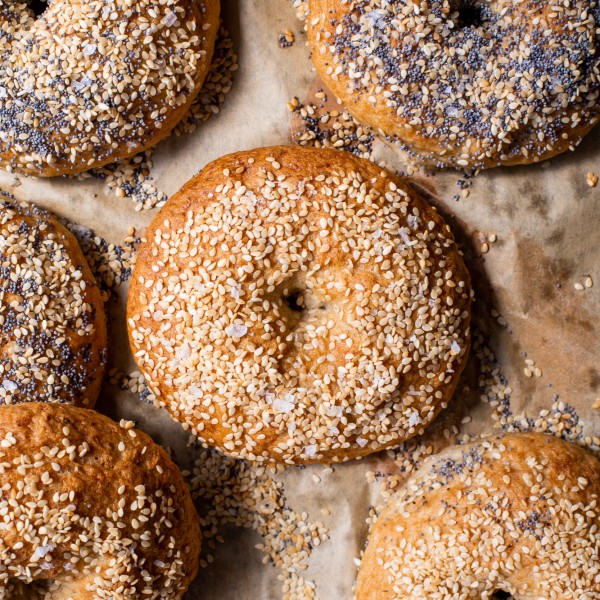
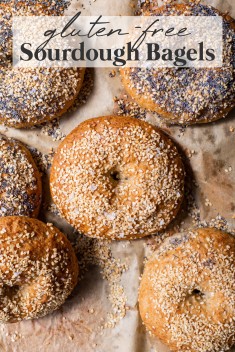
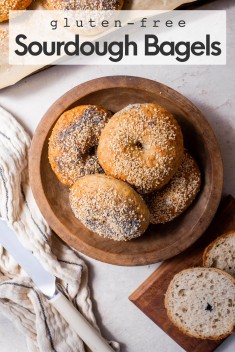
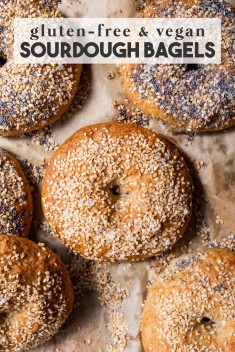
These Gluten-Free Sourdough Bagels are also vegan and made with gluten-free sourdough starter, whole grain gluten-free flours, and whichever toppings and mix-ins you love! These gluten-free bagels perfect for enjoying fresh from the oven or keeping in the freezer for a rainy day.
No gluten-free sourdough starter but still craving bagels? Check out these amazingly fluffy gluten-free bagels made with yeast!
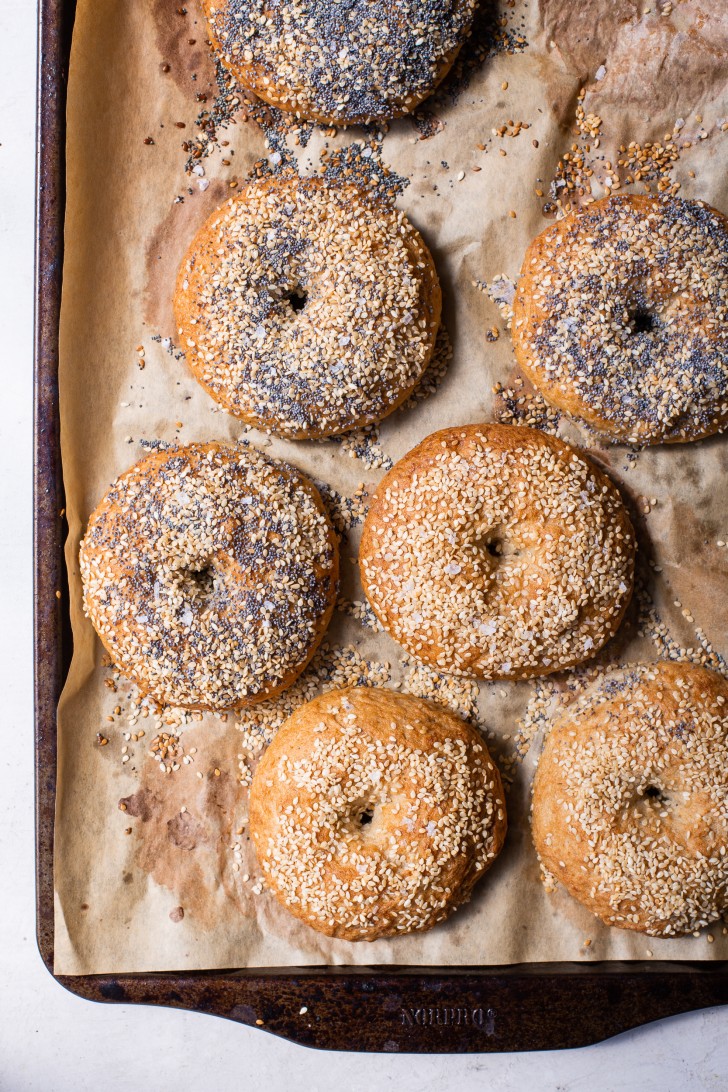
Practically every single day since I first posted the recipe for my homemade gluten-free sourdough bread, I’ve gotten requests for one sourdough recipe more than anything else: gluten-free sourdough bagels!
In my Gluten-Free Sourdough Facebook Group, people request a gluten-free bagel recipe all the time. And I am SO thrilled to finally be able to share the recipe with you – and it’s a good one!!
Bagels have a very special place in my heart, so I wanted these to be perfect. For my whole life, my paternal grandparents have told me stories of the Jewish bakery that my great-grandparents owned in New York that made the most amazing bagels.
My grandparents, who met when my grandma was 13 and my grandpa was 15, would go to the bakery after school for egg bagels and water bagels hot from the oven. Unfortunately, no recipes have been preserved for me, just one cake server remains as my connection to that bakery.
But, as you can imagine, once I started recipe testing for gluten-free bagels, I needed them to be amazing. It runs in my blood! Of course, a gluten-free sourdough bagel isn’t what my ancestors were making, but I know these would make them proud.
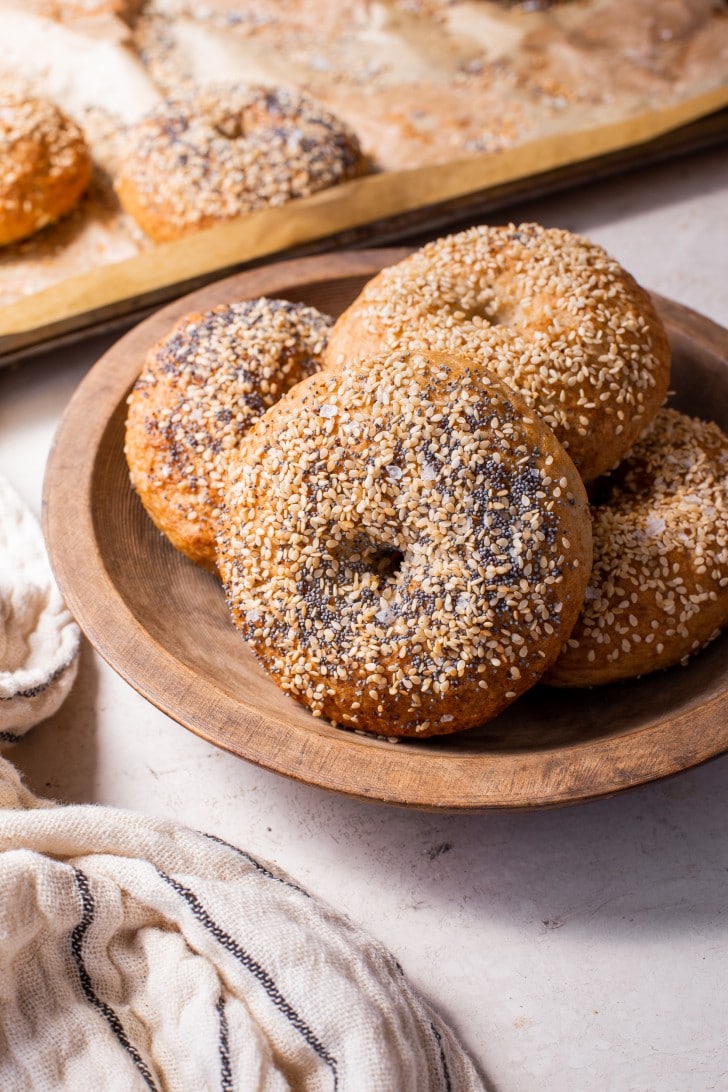
These gluten-free sourdough bagels are…
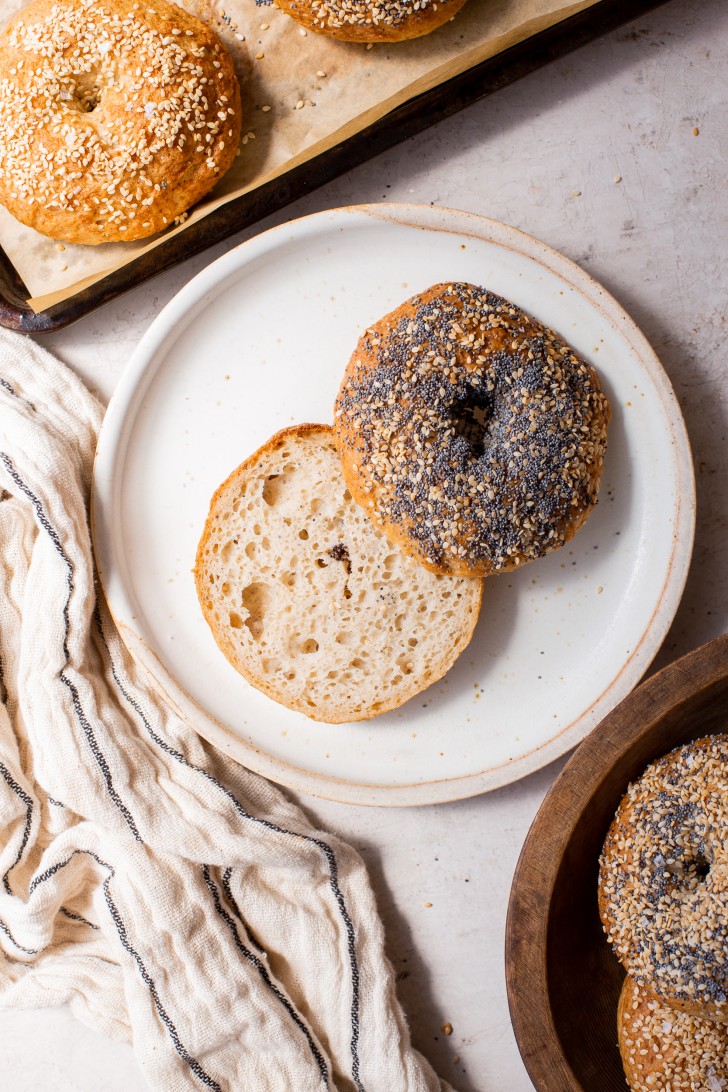
- Perfectly baked and chewy on the outside
- Soft, tender crumb on the inside
- Mild sourdough flavor that isn’t overwhelming
- Perfect for adding your favorite toppings
- Easy to make with a little patience
Are bagels gluten-free?
No, unless you’re specifically seeking out gluten-free bagels, like these gluten-free sourdough bagels, bagels are not naturally gluten-free. They are traditionally made with wheat flour.
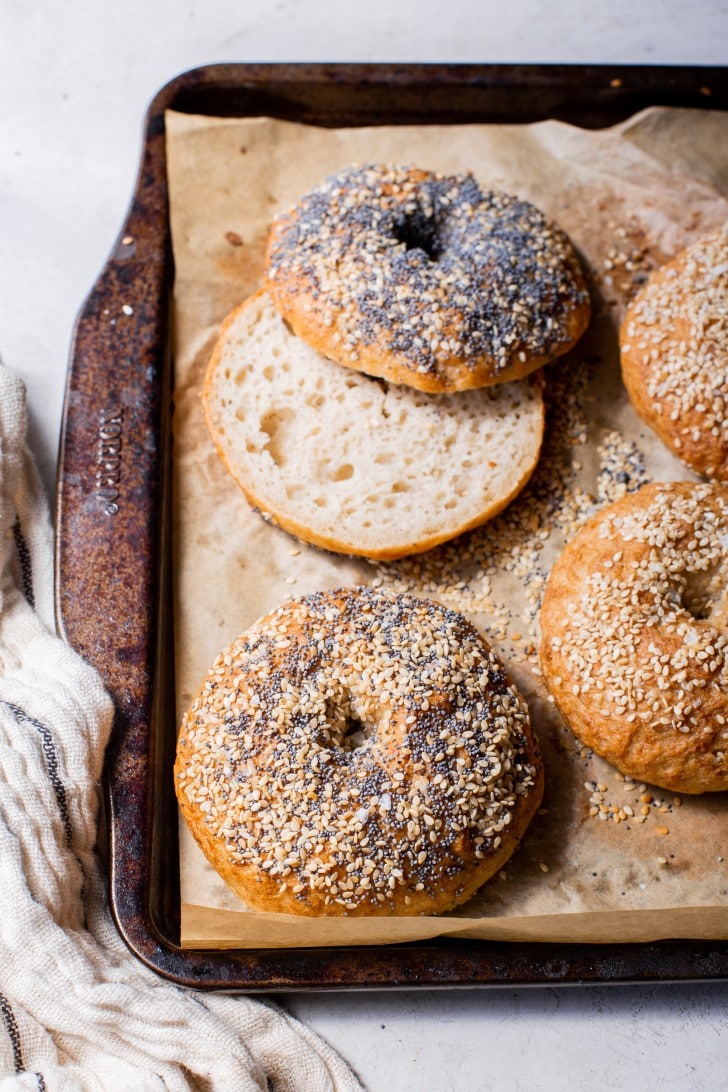
What is in gluten-free bagels?
So if not all bagels are gluten-free, you’re probably wondering what is in gluten-free bagels. Well, let me tell you! For this recipe, we’re using these ingredients:
- Active Gluten-Free Sourdough Starter: if you don’t have a gluten-free sourdough starter yet, follow this guide for how to make one! Since we’re skipping a preferment for this recipe to help these bagels be made more quickly, you’ll want your starter at peak activity when you make this recipe.
- Whole Psyllium Husk: psyllium husk is a form of fiber that acts as our gluten for these bagels: it provides the binding properties and elasticity that help the dough become workable. It gives the structure and support for the bagels to rise, as well. You cannot skip it or replace it with another ingredient.
- Maple Syrup: this provides sugar for the yeast to feed on, which allows the bagel dough to rise.
- Water: filtered water is best for all bread making!
- Olive Oil: this helps soften the crust so it doesn’t get too crunchy in the oven.
- Starch: starches, such as potato starch and tapioca starch, help give a nice, fluffy texture to the bagels.
- Gluten-Free Grain Flours: I love using a combination of different grain flours for this recipe, such as brown rice flour, sorghum flour, quinoa flour, millet flour, teff flour, buckwheat flour…I provide a recommended and tested combination in the recipe, but you can experiment with different combinations here.
- Salt: because no recipe is complete without it :)
- Baking Soda: this isn’t added to the dough, but you’ll use it for the baking soda boil that’s needed for a bagel to be a true bagel. It gives the classic chewy bagel crust!
Can I use a GF flour blend for this recipe?
If you would like to use a mix that you can pre-make to simplify the baking process, I recommend using my homemade gluten-free bread flour blend. This blend contains both starches and whole grain flours, so you’ll use it in place of the total amount of starch + flour. In this case of this recipe, that is 380g.
If you prefer a store-bought blend, I like this multi-flour blend from Vitacost. This blend uses very similar ingredients to the ones my recipe calls for, with no additives or gums.
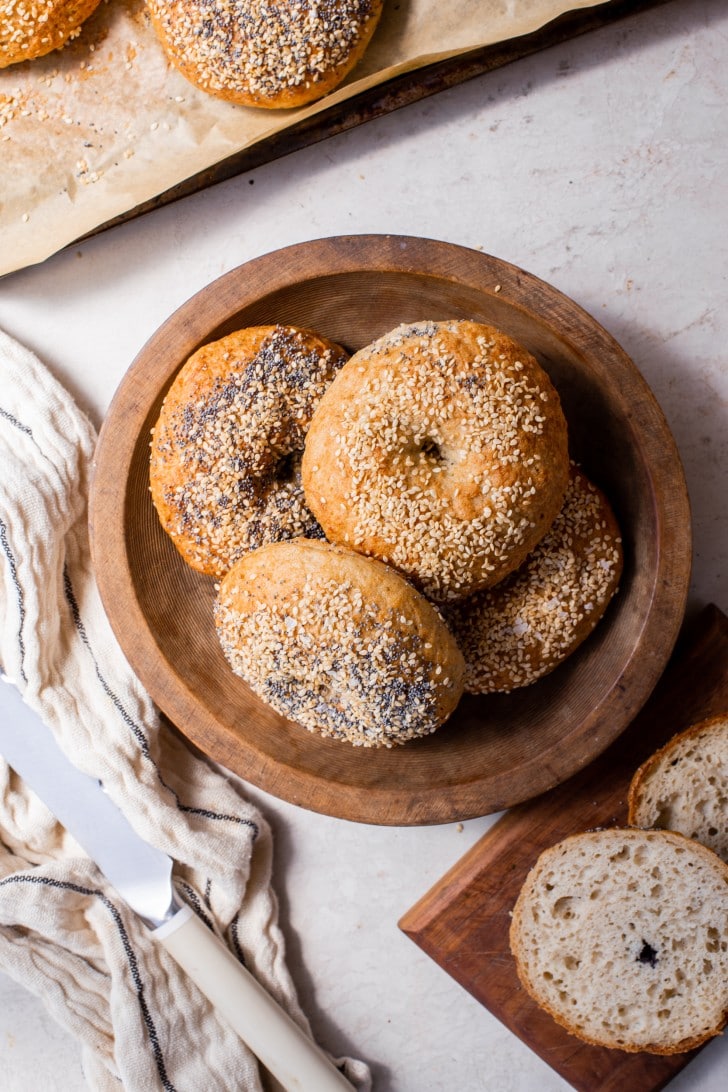
How to make gluten-free bagels:
- Start by hydrating the psyllium with water, and then mix in the maple syrup, olive oil, and active sourdough starter. It should form a thick, gel-like consistency.
- While that hydrates, mix together your starches, gluten-free grain flours, and salt in a large mixing bowl or the bowl of a stand mixer.
- Pour the liquid ingredients into the dry ingredients. Use a dough whisk or the dough hook of your stand mixer to mix into a smooth dough, scraping down the sides as needed to make sure all of the dry ingredients are incorporated.
- Cover and let the dough bulk-ferment in a warm place for about three hours, or until noticeably puffy.
- Divide the dough into 8 equal pieces and shape each piece into a bagel. I like to do this by rolling into a ball and then using my thumb to press a hole in the center, and then open the hole a bit more with my fingers.
- Place the bagels on a lined baking sheet and cover with a towel; let rise for 1 hour.
- While the bagels rise, preheat the oven and get a big pot of water boiling.
- When the bagels have puffed up, add the baking soda to the boiling water and boil the bagels 1 or 2 at a time, depending on the size of your pot, for 30 seconds on each side. Remove from the pot, letting the excess water drip off, and place back down on the baking sheet.
- Repeat for all bagels and add any toppings, like everything bagel seasoning or other seeds of your choice.
- Bake for 30 minutes or until golden brown!
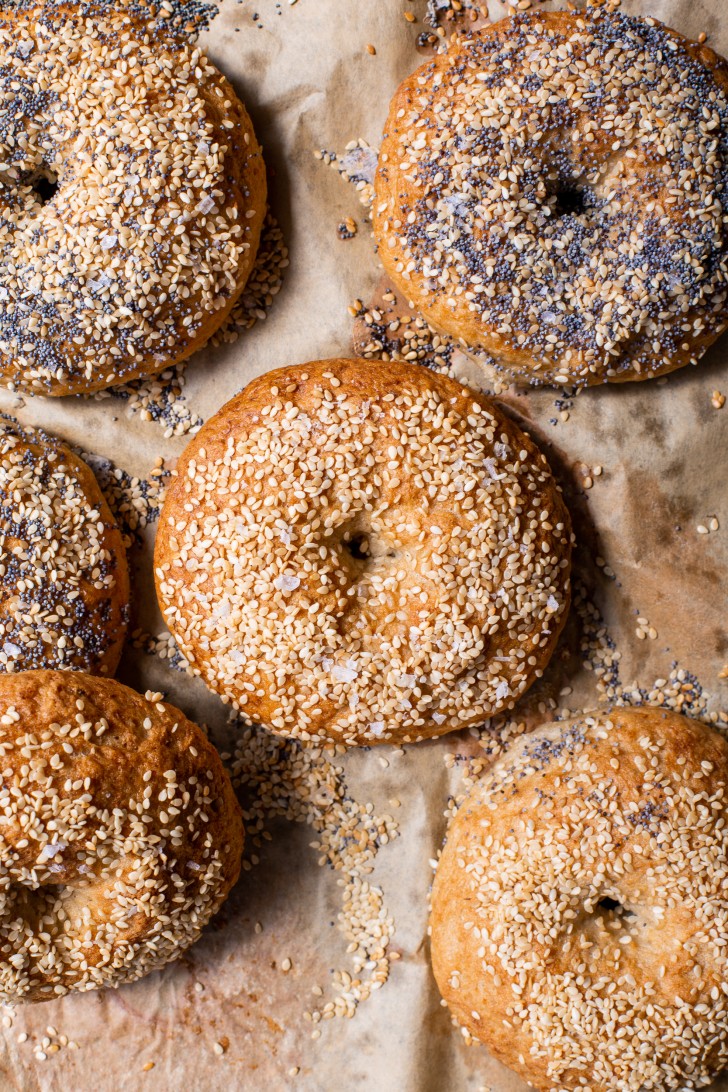
How to store gluten-free bagels:
To store, keep in an airtight bag or container for 2 to 3 days at room temperature.
You can also slice them in half and store them in an airtight container in the freezer for up to 6 months.
Want more gluten-free sourdough recipes?
- How to Make Gluten-Free Sourdough Bread
- Gluten-Free Sourdough Crackers
- Gluten-Free Sourdough Pizza Crust
- Rosemary Roasted Garlic Gluten-Free Sourdough Rolls
- Gluten-Free Sourdough Chocolate Chip Cookies
- Gluten-Free Sourdough Focaccia
Gluten-Free Sourdough Bagels
Ingredients
For the bagels
- 150 g gluten-free sourdough starter
- 20 g whole psyllium husk
- 380 g filtered water
- 20 g maple syrup or honey
- 20 g olive oil
- 60 g potato starch
- 50 g tapioca starch
- 130 g superfine brown rice flour, see Notes
- 140 g sorghum flour, see Notes
- 12 g salt
For the boiling mixture
- 1½ tablespoons baking soda
- 6 cups water
Equipment
- Dough Whisk
Instructions
- In a bowl or large liquid measuring cup, hydrate the psyllium husk with water, and then mix in the maple syrup, olive oil, and active sourdough starter. Let stand for about 10 minutes. It should form a thick, gel-like consistency.150 g gluten-free sourdough starter, 20 g whole psyllium husk, 380 g filtered water, 20 g maple syrup or honey, 20 g olive oil
- While that hydrates, mix together the tapioca flour, potato starch, sorghum flour, and brown rice flour (or my gluten-free bread flour blend) and salt in a large mixing bowl or the bowl of a stand mixer.60 g potato starch, 50 g tapioca starch, 130 g superfine brown rice flour, 140 g sorghum flour, 12 g salt
- Pour the liquid ingredients into the dry ingredients and use a dough whisk or the dough hook of your stand mixer to mix into a smooth dough, scraping down the sides as needed to make sure all of the dry ingredients are well incorporated.
- Cover and let the dough bulk-ferment in a warm place for about three hours, or until noticeably puffy.
- Punch down the dough to release the air bubbles, and then divide the dough into 8 equal pieces (about 122g each) and shape each piece into a bagel. I like to do this by rolling into a ball and then using my thumb to press a hole in the center, and then open the hole a bit more with my fingers. You can also roll the dough into a long piece and then seal the ends together.
- Place the bagels on a lined baking sheet and cover with a clean tea towel; let rise for 1 hour.
- While the bagels rise, preheat the oven to 425℉ and get a big pot of water boiling.6 cups water
- When the bagels have puffed up, add the baking soda to the boiling water and boil the bagels 1 or 2 at a time, depending on the size of your pot, for 30 seconds on each side. I use a spider to place the bagels in the water and remove them, as it allows excess water to drip off easily. Remove from the pot, letting the excess water drip off as much as possible, and place back down gently on the baking sheet.1½ tablespoons baking soda
- Repeat for all bagels and add any toppings, like everything bagel seasoning or other seeds of your choice. Immediately place into the preheated oven.
- Bake for 30 minutes or until golden brown on top and crisp on the bottom.
- To store, keep in an airtight bag or container for 2 to 3 days at room temperature. You can also slice them in half and store them in an airtight container in the freezer for up to 6 months.

Greetings
If you wish to freeze the bagels do you need to slice first
Thank you
Heanbe
Hi, you don’t need to but it makes them easier to toast straight from frozen so I prefer to :)
Thanks Rachel
Hi! I’m planning to make these next week when I have enough starter. My first question is if brown rice starter is compatible with this recipe? Also I have superfine psyllium powder and not whole. Will this still work? If so, what measurement would I do instead? Thanks so much!!
Hi Shannon, yes brown rice starter is great for this. You’ll want to use 75% of the called for amount if you’re using psyllium powder. It should work, but I personally have never made it with the powder.
Hi, I’ve put together this recipe (almost!) exactly how it was written; however, I don’t want to cook these tonight; I’d rather put it in fridge, and cook tomorrow. Will I be subject to GF SD police with this move? More importantly – will they be successful?
Was also considering making a few Cinnamon raisin, and I figured I’d do that after I divide up tomorrow. Thoughts? Thanks for all your good work!
You can definitely refrigerate overnight and bake in the morning. Shouldn’t be an issue. You can divide the dough and add any mix-in’s after the initial proof, then shape/boil/bake. Enjoy!
Ohhhh my Goodness after trying to bake G.F. Sourdough for 6 months and many failed recipes I finally figured it out what I was doing wrong I replaced Psyllium Husk with Glucomannan in all recipes that call for W.P.Husk it was more gentle on my tummy well I ordered a bag of Whole Psyllium husk and Today I Conquered your Sourdough Bagel Recipe & I couldn’t be more excited to start this Sourdough Journey with Your Recipe Thank you
So glad you loved it, Melanie!
Can we make these grain free with tigernut, green banana & almond flour for the 100gm of flour? Also adding 1tsp baking soda & Tbs Apple cider vinegar w/wet ingredients? I’m
Hi Annmarie, I haven’t tested it this way so I’m not sure. Grain-free flours do tend to act differently so it would likely require some experimentation.
I made these grain-free by using using a tigernut/cassava/green banana flour starter. Then, used tigernut & green banana flours w/arrowroot instead of tapioca flour to equal the 380gms flour for the mix. Added a tsp baking soda mixed w/a Tbs apple cider vinegar to the starter/psyllium mix before adding all together w/the dry ingredients. Otherwise followed your directions exactly. The bagels were perfect. THANK YOU!! P.S. Your recent travel log on Instagram is awesome! :)
Ohh I am SO glad to see this updated comment saying it worked – how fabulous!! I’ll need to try this :)
Hi! I’ve now made both your GF sourdough and this and they’ve turned out raw in the middle and hard on the outside. Each step looked correct until the final result when it was pulled from the oven. Any insight into what’s not working? My GF sourdough starter looks great and has worked with other recipes. I live at altitude.
Hi Lily, sorry to hear you’re having issues! I haven’t baked a lot of bread at altitude but that certainly might be affecting it. Without more information it’s hard to know what’s going wrong – are you changing anything about the recipe? What do you mean by raw – are they doughy and sticky or just a little tacky?
can this be made with just arrowroot starch instead of the potato and tapioca
Yes, it can! It can slightly affect the texture but should still be delish.
I made these bagels today using brown rice flour, quinoa flour, buckwheat and sorghum. I followed the recipe and let them cool. I just sliced into one and it’s gummy in the middle though it still taste good. Can I pop them back in the oven and bake a little longer to get the insides to have more of a fully cooked bagel feeling?
Hi Randi, once they’re cooled it’s hard to fix it by baking them further but toasting should help the gumminess. Were they super gummy or just a little tacky? It’s possible they needed a longer bake or rise.
Tacky I guess. I think they maybe needed to rise more. Even so, they taste great!
LOVE, LOVE, LOVE these bagels! Any suggestions for making them pumpkin flavored?
Hi Debbie, so glad you love them! That sounds fab :D adding pumpkin spice would be super easy. To add pumpkin puree, you’d want to replace some of the water with pumpkin puree in the dough. I haven’t experimented with it so unfortunately I can’t say exactly how much you’d want to add. Hope it turns out deliciously!!