

 by
by 


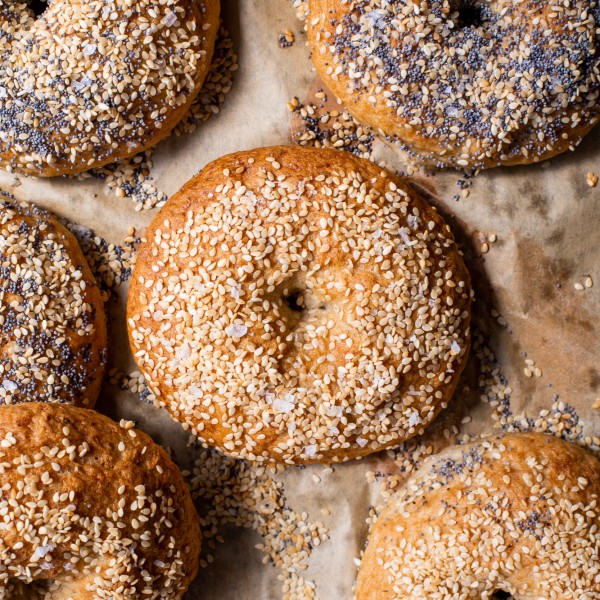
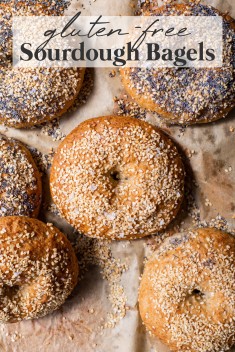
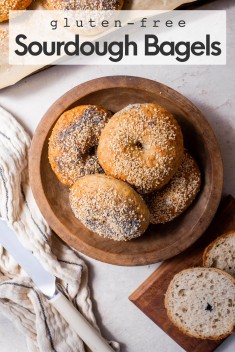
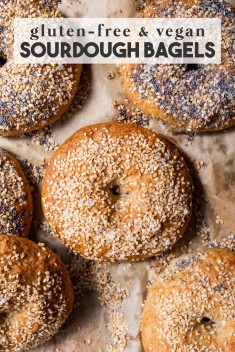
These Gluten-Free Sourdough Bagels are also vegan and made with gluten-free sourdough starter, whole grain gluten-free flours, and whichever toppings and mix-ins you love! These gluten-free bagels perfect for enjoying fresh from the oven or keeping in the freezer for a rainy day.
No gluten-free sourdough starter but still craving bagels? Check out these amazingly fluffy gluten-free bagels made with yeast!
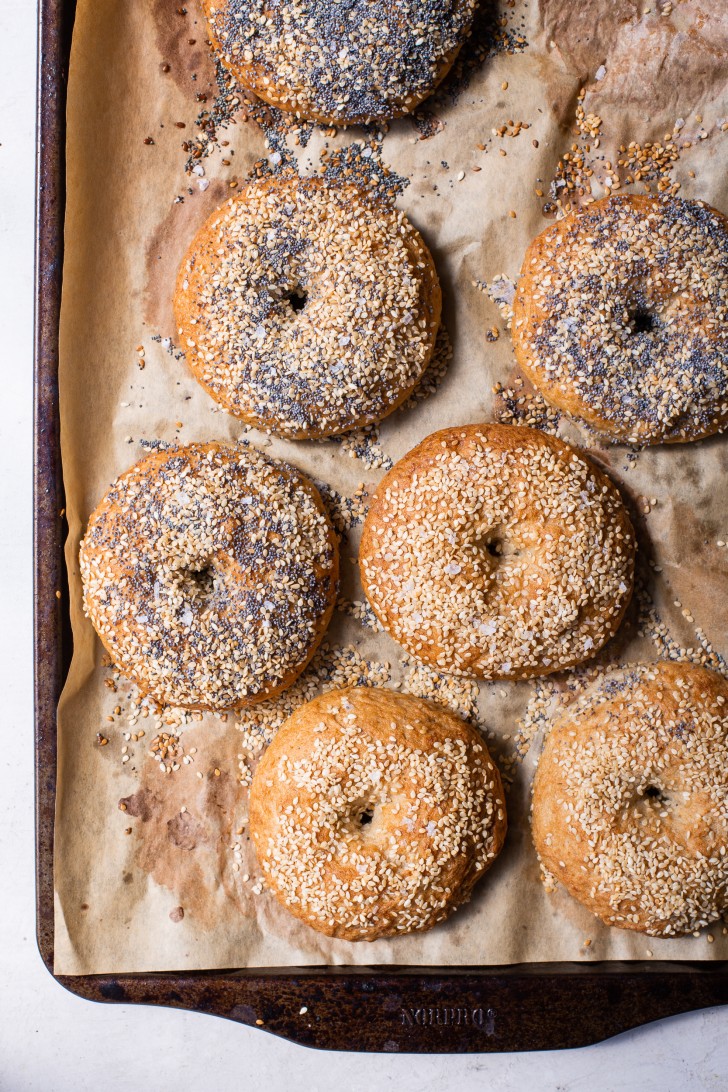
Practically every single day since I first posted the recipe for my homemade gluten-free sourdough bread, I’ve gotten requests for one sourdough recipe more than anything else: gluten-free sourdough bagels!
In my Gluten-Free Sourdough Facebook Group, people request a gluten-free bagel recipe all the time. And I am SO thrilled to finally be able to share the recipe with you – and it’s a good one!!
Bagels have a very special place in my heart, so I wanted these to be perfect. For my whole life, my paternal grandparents have told me stories of the Jewish bakery that my great-grandparents owned in New York that made the most amazing bagels.
My grandparents, who met when my grandma was 13 and my grandpa was 15, would go to the bakery after school for egg bagels and water bagels hot from the oven. Unfortunately, no recipes have been preserved for me, just one cake server remains as my connection to that bakery.
But, as you can imagine, once I started recipe testing for gluten-free bagels, I needed them to be amazing. It runs in my blood! Of course, a gluten-free sourdough bagel isn’t what my ancestors were making, but I know these would make them proud.
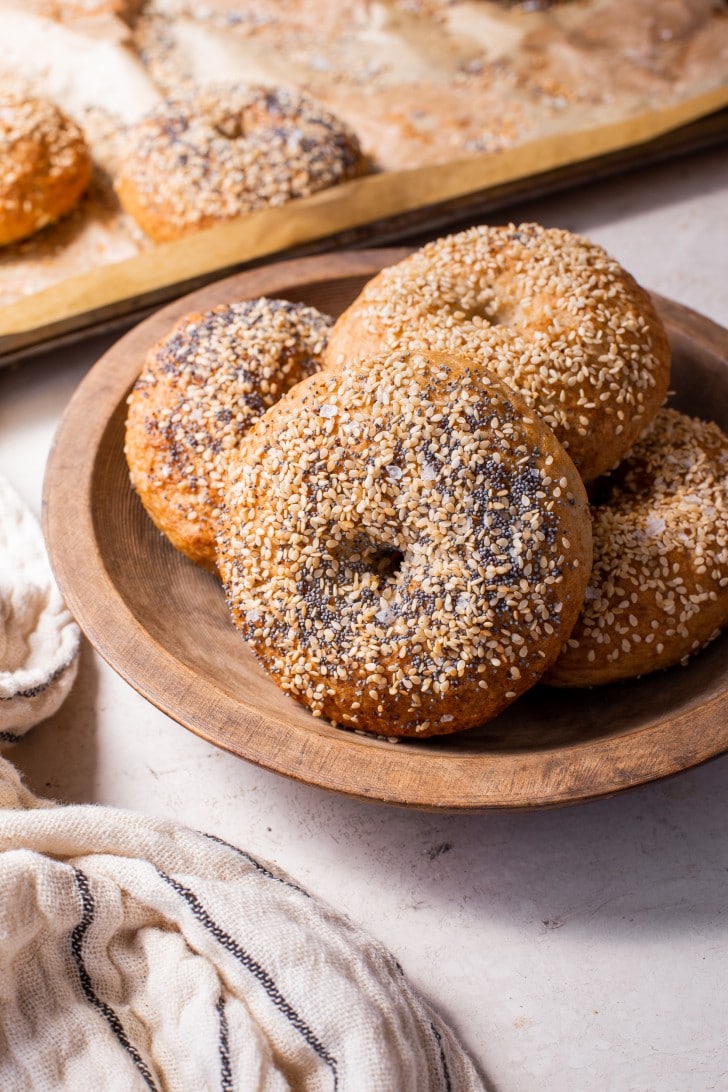
These gluten-free sourdough bagels are…
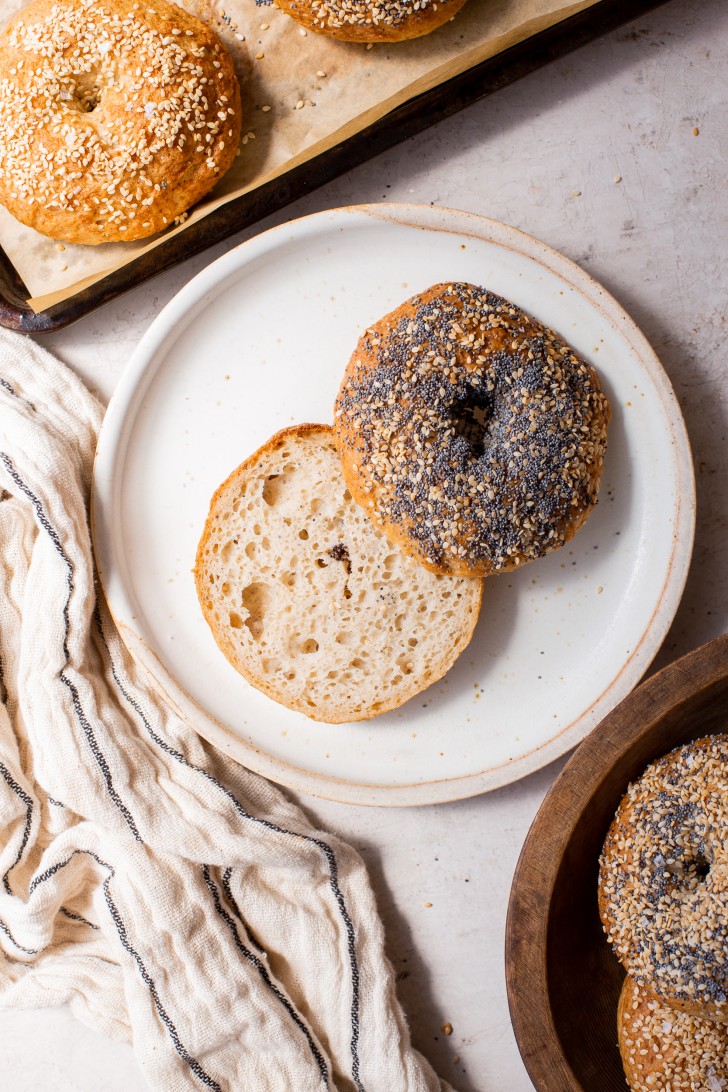
- Perfectly baked and chewy on the outside
- Soft, tender crumb on the inside
- Mild sourdough flavor that isn’t overwhelming
- Perfect for adding your favorite toppings
- Easy to make with a little patience
Are bagels gluten-free?
No, unless you’re specifically seeking out gluten-free bagels, like these gluten-free sourdough bagels, bagels are not naturally gluten-free. They are traditionally made with wheat flour.
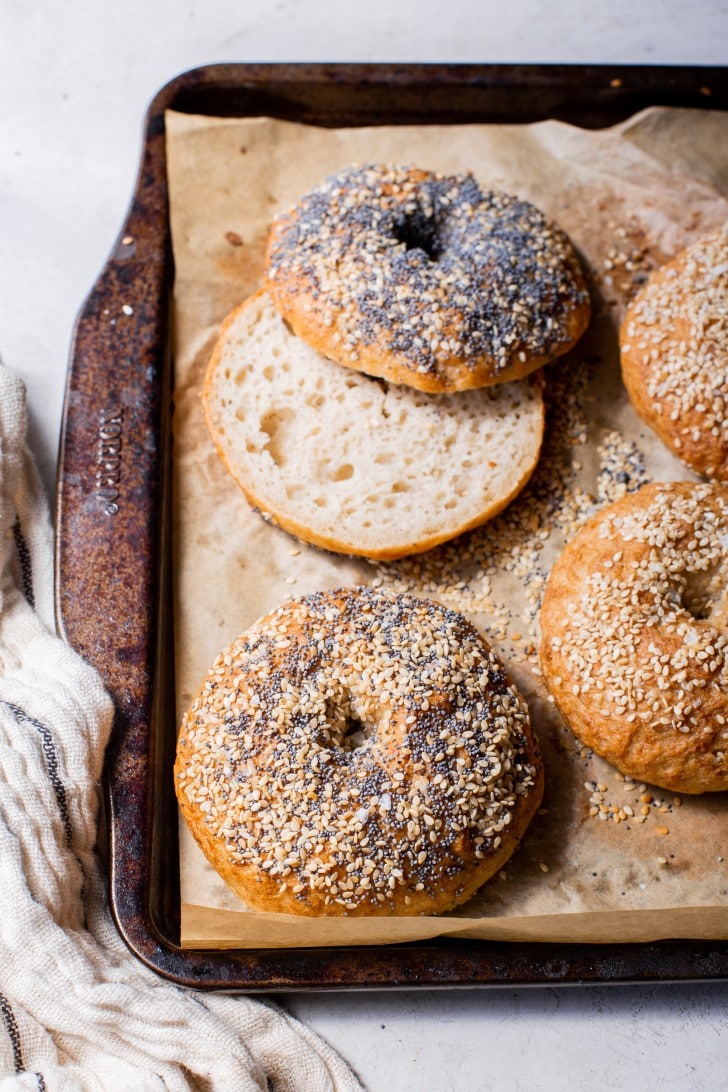
What is in gluten-free bagels?
So if not all bagels are gluten-free, you’re probably wondering what is in gluten-free bagels. Well, let me tell you! For this recipe, we’re using these ingredients:
- Active Gluten-Free Sourdough Starter: if you don’t have a gluten-free sourdough starter yet, follow this guide for how to make one! Since we’re skipping a preferment for this recipe to help these bagels be made more quickly, you’ll want your starter at peak activity when you make this recipe.
- Whole Psyllium Husk: psyllium husk is a form of fiber that acts as our gluten for these bagels: it provides the binding properties and elasticity that help the dough become workable. It gives the structure and support for the bagels to rise, as well. You cannot skip it or replace it with another ingredient.
- Maple Syrup: this provides sugar for the yeast to feed on, which allows the bagel dough to rise.
- Water: filtered water is best for all bread making!
- Olive Oil: this helps soften the crust so it doesn’t get too crunchy in the oven.
- Starch: starches, such as potato starch and tapioca starch, help give a nice, fluffy texture to the bagels.
- Gluten-Free Grain Flours: I love using a combination of different grain flours for this recipe, such as brown rice flour, sorghum flour, quinoa flour, millet flour, teff flour, buckwheat flour…I provide a recommended and tested combination in the recipe, but you can experiment with different combinations here.
- Salt: because no recipe is complete without it :)
- Baking Soda: this isn’t added to the dough, but you’ll use it for the baking soda boil that’s needed for a bagel to be a true bagel. It gives the classic chewy bagel crust!
Can I use a GF flour blend for this recipe?
If you would like to use a mix that you can pre-make to simplify the baking process, I recommend using my homemade gluten-free bread flour blend. This blend contains both starches and whole grain flours, so you’ll use it in place of the total amount of starch + flour. In this case of this recipe, that is 380g.
If you prefer a store-bought blend, I like this multi-flour blend from Vitacost. This blend uses very similar ingredients to the ones my recipe calls for, with no additives or gums.
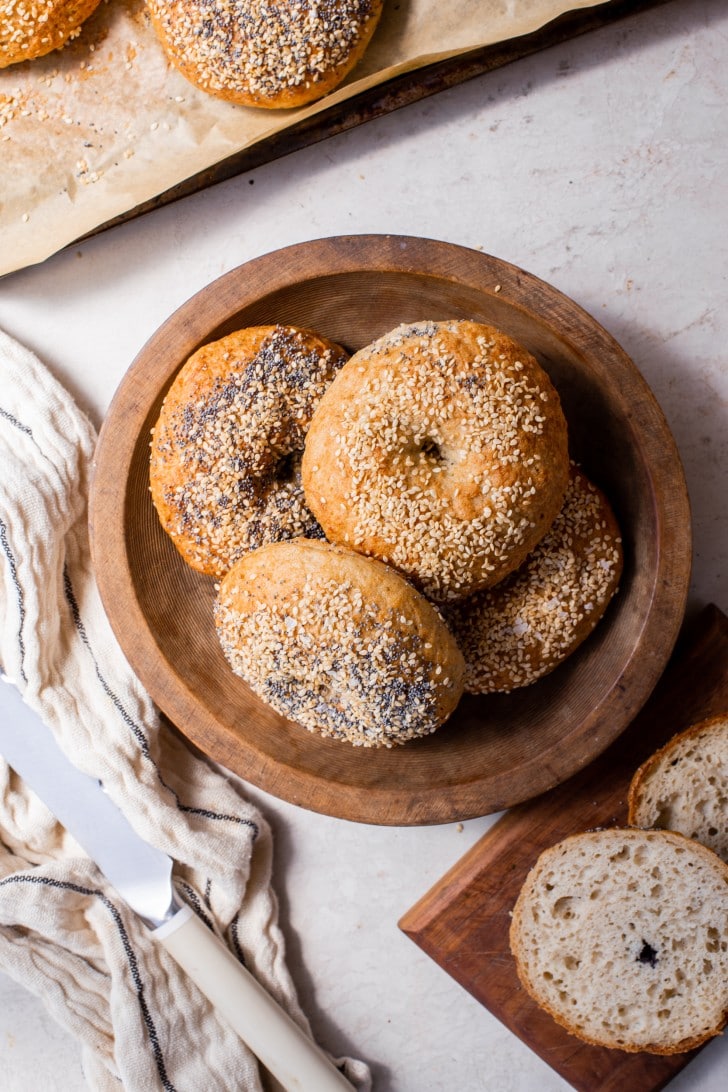
How to make gluten-free bagels:
- Start by hydrating the psyllium with water, and then mix in the maple syrup, olive oil, and active sourdough starter. It should form a thick, gel-like consistency.
- While that hydrates, mix together your starches, gluten-free grain flours, and salt in a large mixing bowl or the bowl of a stand mixer.
- Pour the liquid ingredients into the dry ingredients. Use a dough whisk or the dough hook of your stand mixer to mix into a smooth dough, scraping down the sides as needed to make sure all of the dry ingredients are incorporated.
- Cover and let the dough bulk-ferment in a warm place for about three hours, or until noticeably puffy.
- Divide the dough into 8 equal pieces and shape each piece into a bagel. I like to do this by rolling into a ball and then using my thumb to press a hole in the center, and then open the hole a bit more with my fingers.
- Place the bagels on a lined baking sheet and cover with a towel; let rise for 1 hour.
- While the bagels rise, preheat the oven and get a big pot of water boiling.
- When the bagels have puffed up, add the baking soda to the boiling water and boil the bagels 1 or 2 at a time, depending on the size of your pot, for 30 seconds on each side. Remove from the pot, letting the excess water drip off, and place back down on the baking sheet.
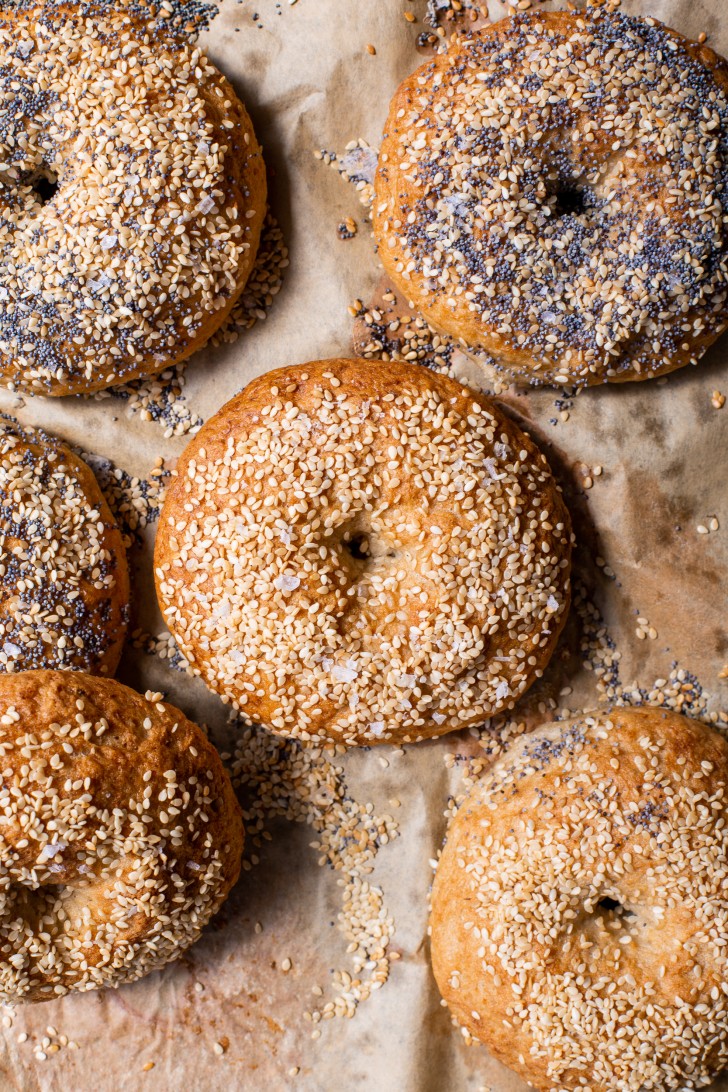
- Repeat for all bagels and add any toppings, like everything bagel seasoning or other seeds of your choice.
- Bake for 30 minutes or until golden brown!
How to store gluten-free bagels:
To store, keep in an airtight bag or container for 2 to 3 days at room temperature.
You can also slice them in half and store them in an airtight container in the freezer for up to 6 months.
Want more gluten-free sourdough recipes?
- How to Make Gluten-Free Sourdough Bread
- Gluten-Free Sourdough Crackers
- Gluten-Free Sourdough Pizza Crust
- Rosemary Roasted Garlic Gluten-Free Sourdough Rolls
- Gluten-Free Sourdough Chocolate Chip Cookies
- Gluten-Free Sourdough Focaccia
Gluten-Free Sourdough Bagels
Ingredients
For the bagels
- 150 g gluten-free sourdough starter
- 20 g whole psyllium husk
- 380 g filtered water
- 20 g maple syrup or honey
- 20 g olive oil
- 60 g potato starch
- 50 g tapioca starch
- 130 g superfine brown rice flour, see Notes
- 140 g sorghum flour, see Notes
- 12 g salt
For the boiling mixture
- 1½ tablespoons baking soda
- 6 cups water
Equipment
- Dough Whisk
Instructions
- In a bowl or large liquid measuring cup, hydrate the psyllium husk with water, and then mix in the maple syrup, olive oil, and active sourdough starter. Let stand for about 10 minutes. It should form a thick, gel-like consistency.150 g gluten-free sourdough starter, 20 g whole psyllium husk, 380 g filtered water, 20 g maple syrup or honey, 20 g olive oil
- While that hydrates, mix together the tapioca flour, potato starch, sorghum flour, and brown rice flour (or my gluten-free bread flour blend) and salt in a large mixing bowl or the bowl of a stand mixer.60 g potato starch, 50 g tapioca starch, 130 g superfine brown rice flour, 140 g sorghum flour, 12 g salt
- Pour the liquid ingredients into the dry ingredients and use a dough whisk or the dough hook of your stand mixer to mix into a smooth dough, scraping down the sides as needed to make sure all of the dry ingredients are well incorporated.
- Cover and let the dough bulk-ferment in a warm place for about three hours, or until noticeably puffy.
- Punch down the dough to release the air bubbles, and then divide the dough into 8 equal pieces (about 122g each) and shape each piece into a bagel. I like to do this by rolling into a ball and then using my thumb to press a hole in the center, and then open the hole a bit more with my fingers. You can also roll the dough into a long piece and then seal the ends together.
- Place the bagels on a lined baking sheet and cover with a clean tea towel; let rise for 1 hour.
- While the bagels rise, preheat the oven to 425℉ and get a big pot of water boiling.6 cups water
- When the bagels have puffed up, add the baking soda to the boiling water and boil the bagels 1 or 2 at a time, depending on the size of your pot, for 30 seconds on each side. I use a spider to place the bagels in the water and remove them, as it allows excess water to drip off easily. Remove from the pot, letting the excess water drip off as much as possible, and place back down gently on the baking sheet.1½ tablespoons baking soda
- Repeat for all bagels and add any toppings, like everything bagel seasoning or other seeds of your choice. Immediately place into the preheated oven.
- Bake for 30 minutes or until golden brown on top and crisp on the bottom.
- To store, keep in an airtight bag or container for 2 to 3 days at room temperature. You can also slice them in half and store them in an airtight container in the freezer for up to 6 months.

The first time I made these I didn’t use fresh starter and they didn’t really rise.. but honestly still super good. I left some plain for my son with allergies. For my bagels, I grated some cheddar cheese and topped some of my bagels with onion and garlic seasoning and put cheese on top about 10 min prior to bagels being done. Fantastic!!!
I have learned these disappear fast and now make a double or triple batch to freeze. These are sooo good. My son loves when I make pizza bagels with these and his DF cheese.
So glad you love them, your toppings sound so delicious! Thanks for the feedback, Kate :)
Would psyllium husk powder work?
Yes, it would, just use 75% of the called-for amount.
Is there a halfway point that I could make part of these at night and finish them in the morning so we can eat them for breakfast?!
Hi Becka, you can put them in the fridge right after shaping them!
So good! Finally a dairy free, gluten free recipe that tastes great! I tried something another recipe recommended and boiled them in molasses water (sub 1T molasses instead of baking soda) and they turned out so good!!
Thanks!
So glad you loved them, Beth! Thanks so much for the feedback :)
I’m gonna give this a shot tomorrow! I was wondering if you’ve tried to make these as cinnamon raisin?? Do you think it would work with this recipe?
Super excited, as I’ve had great success with your sourdough bread recipe.
Hi Sarah, yes I did make a cinnamon raisin version! I added about 1 teaspoon of cinnamon I believe, and just mixed in raisins until the amount seemed correct. Hope this helps, and enjoy!
Oh My Goodness These bagels are divine!! Perfect texture and flavor! I did half with everything bagel seasoning and half just sprinkled with cinnamon sugar (a la Panera cinnamon crunch bagel) and even my non celiac husband was impressed! Thank you for this recipe, as well as all of your others!!
What is the benefit of punching down the dough and then shaping? It seems to not rise as well the second time. Why not just shape them and rise longer?
Hi Julie, it helps develop the flavor, however you can skip right to shaping if you prefer :)
Can you let them proof in the fridge overnight then bake them in the morning?
Yes that should be fine!!
I’m wondering what went wrong when I tried to make these – once I combined the dry and liquid ingredients, the dough became flaky and did not combine well into a smooth dough. It felt as though there was too much of the dry ingredients, but I measured everything with a food scale following the recipe. Help!
Hi Haley, without more info it’s hard to know – did you mix by hand? Sometimes it can take a while to come together, or if the psyllium sat for a while, it can gel a lot and make it harder to incorporate, but it should still come together with enough mixing. Are you sure no ingredients were missed or anything?
Can I make this recipe without honey? Or could I use monkfruit? Looking for a sugar free version.
Hi Heidi, I wouldn’t recommend honey. The sugar is there to feed the yeast, not provide sweetness – most of it gets used by the yeast as food during the rising process, but you can try cutting it down or eliminating it completely. You may get slightly less rise, though.
Hi! So far I’m loving the bread recipe! Going to try the bagel recipe
As is, any tips on attempting a cinnamon raisin bagel in the future?
Go for it!! They’re so delicious – I did a cinnamon raisin bagel with my regular gluten-free bagels. Amounts depend on how much dough you’re using, since I just did a few bagels of that flavor, but you’ll want to add between 1/4 teaspoon to 1 teaspoon cinnamon to the dough and as many raisins as you’d like folded into them! I hydrated mine to make sure they didn’t suck too much liquid out of the dough. Don’t add too many or they dough structure will be compromised :) hope this helps!
Hi! First, I appreciate you! I’d like to troubleshoot what may have gone wrong. I used your method 4 times now. The first 3 times were with gf blends that had xanthan gum because I have a ton. By the 3rd try they were almost perfect, not gummy but ever so slightly tacky before toasting. Toasted was perfect.
I finally gave in and bought all your recommended flours and waited until my starter was a peak activation and followed the recipe exactly. The dough didn’t seem to rise much after 3 hours (75 degrees where it was sitting) and was somewhat dry and so making the dough balls was more challenging than previous renditions. After an hour wait for second rise again I didn’t notice much difference but tried boiling the first bagel. It sunk so I kept doing this every 15 minutes until it was another hour later.
The bagels have decent flavor but are dense and not very attractive as my previous ones. I’m perplexed. I even used a micro scale to measure every ingredient.
Do you think I should have added more water or oil when I noticed the dough being so dry? Would have had hurt to let them rise longer for both? It seems like 75 degrees is warm enough though.
Lastly, how do you cover your dough? I just used a tea towel over the bowl for first rise (the dough seemed like it dried out too much then). And I covered the formed bagels with a tea towel as they rose.
I appreciate any insight. I used flours you link to so I don’t think that’s a problem.
I’ve got your sourdough bread dough rising right now and it seems perfect so hoping that will turn out!
Thanks, again!