

 by
by 


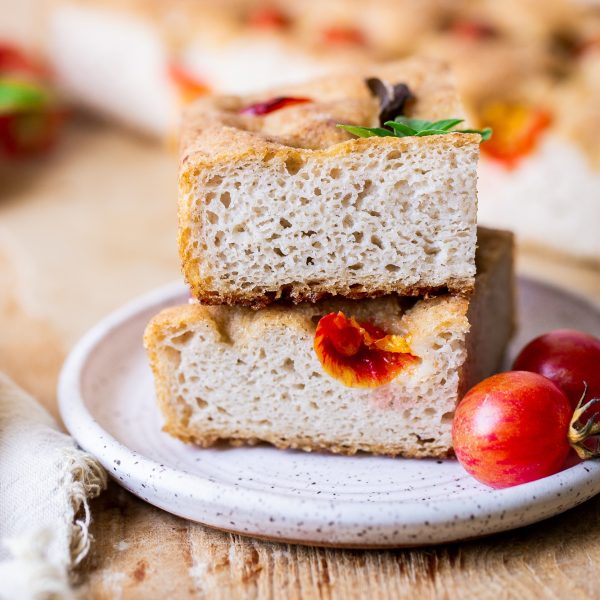
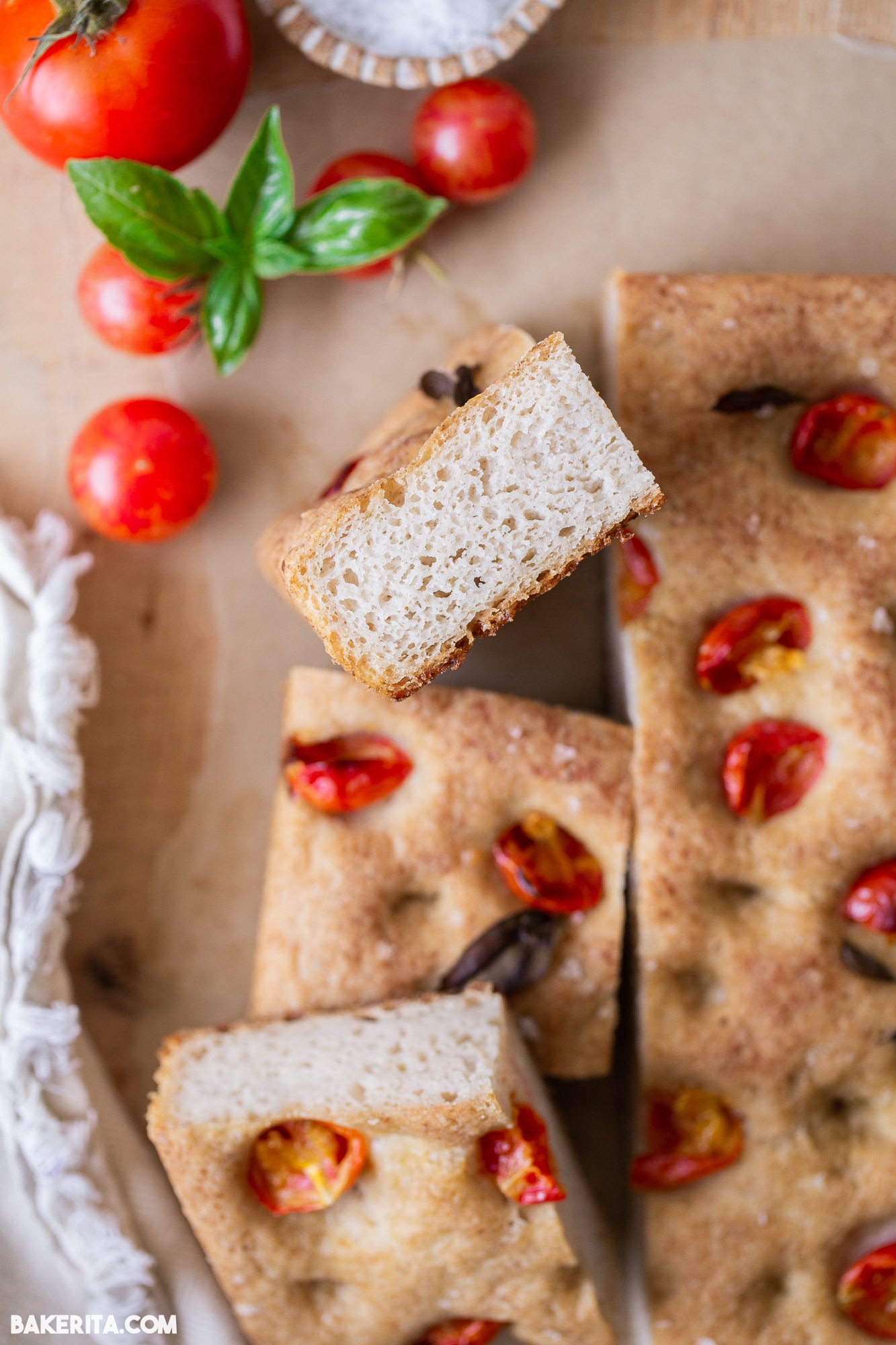
This Gluten-Free Sourdough Focaccia Bread is a simple seven-ingredient focaccia recipe that’s made with gluten-free sourdough discard. It’s easy to make, super fluffy and soft, and absolutely delicious! Perfect for dunking in olive oil, using as sandwich bread, or making into sourdough croutons.
Want to make focaccia without a sourdough starter? You’ll love this quick and easy gluten-free focaccia recipe made with yeast!
Early in my gluten-free sourdough bread journey, I wanted to try making focaccia. I had never made focaccia before — gluten-free, sourdough, or otherwise, and I was a bit lost on where to start. I scoured some recipes that used sourdough and all seemed longer and more complicated than they needed to be. They also used eggs, and I want to keep this recipe vegan. So, as it always does, I couldn’t find what I was looking for and had to start on my own journey in focaccia land.
Thankfully, the focaccia gods were smiling upon me and it turns out – gluten-free sourdough focaccia can be EASY. It can be made with sourdough discard, doesn’t need eggs, and doesn’t even need a whole lot of ingredients. In fact, this recipe uses just seven ingredients…and two of those ingredients are water and salt.
This recipe is adapted from my gluten-free sourdough pizza crust – a major winner in itself that you’ve got to try if you haven’t yet!
Love this focaccia recipe? You’ll adore all of my favorite gluten-free sourdough recipes!
Madison says: “This is the best gluten free bread ever! This is my third time making it (the last one I made I brought to a potluck and got compliments). Thank you for putting this lovely recipe with its AMAZINGLY EASY to follow instructions out into the universe.”
Here’s what you need to make gluten-free sourdough focaccia:
- Psyllium Husk: this recipe uses whole psyllium husk to provide chew and elasticity to the bread.
- Water: filtered is best for all things sourdough!
- Gluten-Free Sourdough Starter: here’s a how-to make your own gluten-free sourdough starter. It doesn’t need to be super active here, new discard works just fine, just don’t use discard that’s been sitting in your fridge or freezer for a while.
- Starch: I like using potato, tapioca, or arrowroot starch here.
- Gluten-Free Flours: I typically use a combination of brown rice flour, sorghum flour, and/or quinoa flour here. You can also use flours like cassava, teff, buckwheat, etc. Grain and pseudograin flours tend to work best.
- Sea Salt: for flavor!
- Olive Oil: a must for focaccia, make sure to use a good one to drizzle all over your bread before drizzling and baking!
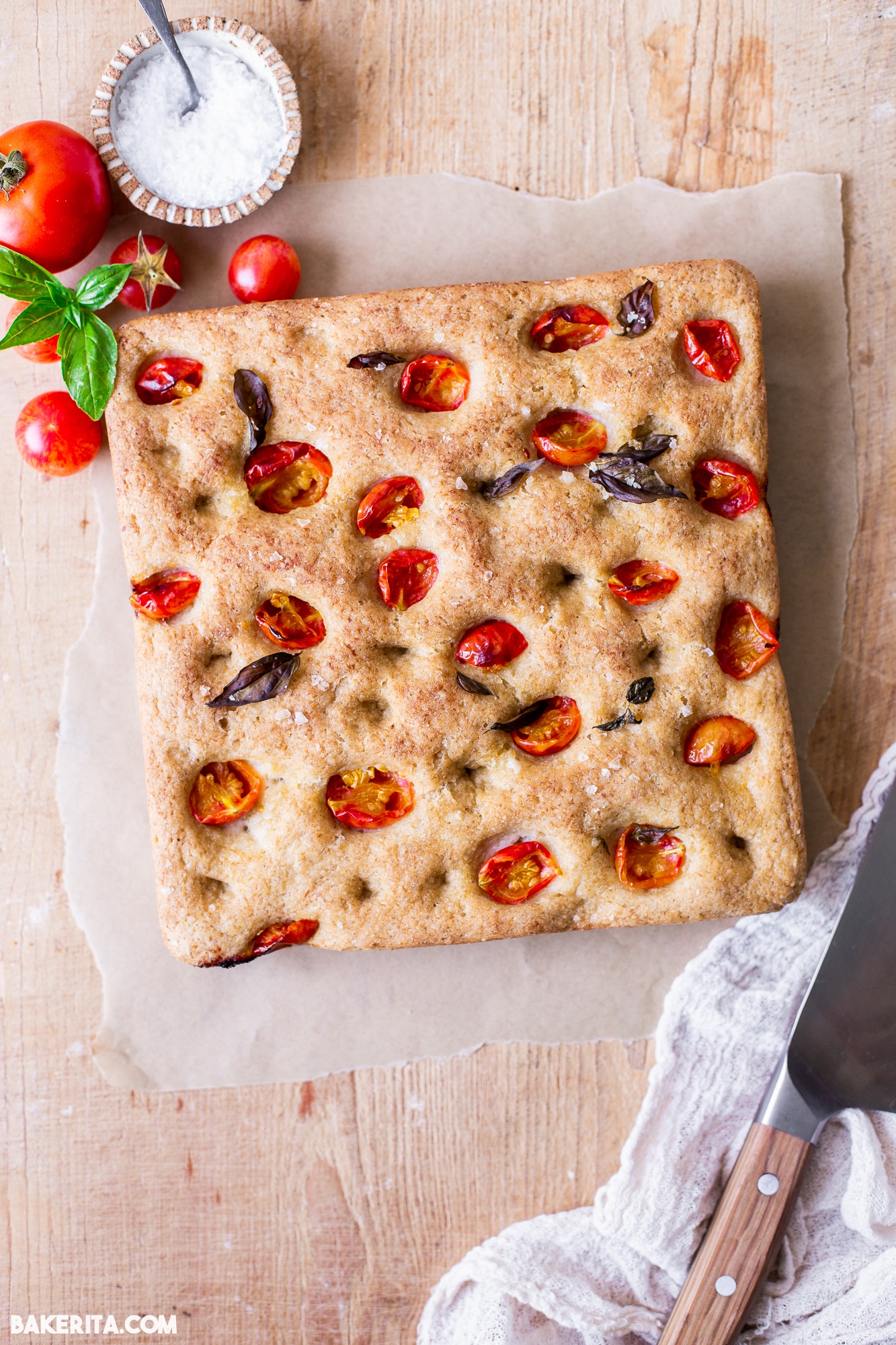
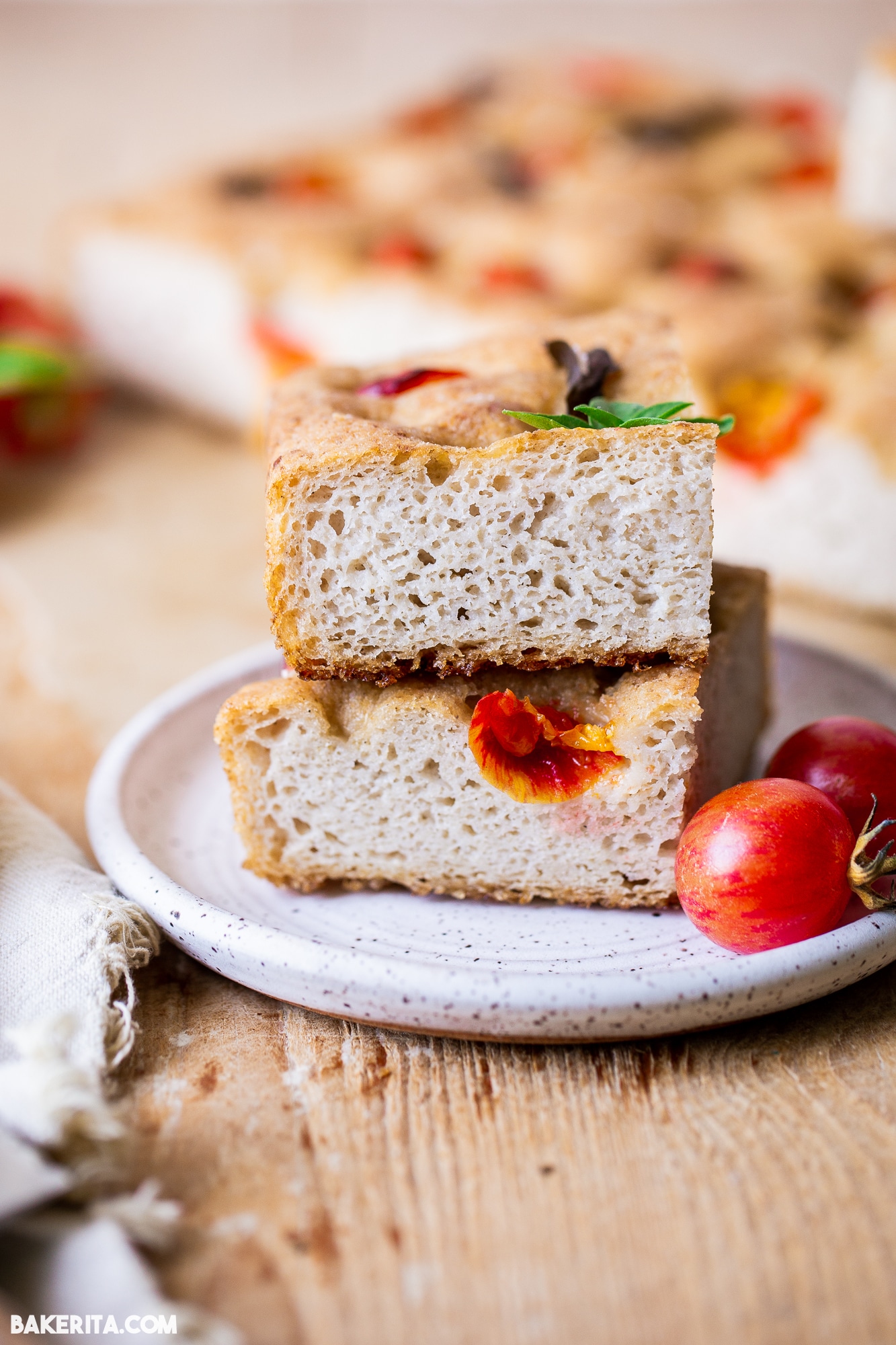
- Toppings of your choice: sometimes I leave the sourdough focaccia plain, other times I press tomatoes into it, as pictured, or top with herbs…but be creative here! There’s tons of great toppings you can use for your focaccia…(see my idea list below!)
Can I use a GF flour blend for this recipe?
If you would like to use a mix that you can pre-make to simplify the baking process, I recommend using my homemade gluten-free bread flour blend. This blend contains both starches and whole grain flours, so you’ll use it in place of the total amount of starch + flour. In this case of this recipe, that is 335g.
If you prefer a store-bought blend, I like this multi-flour blend from Vitacost. This blend uses very similar ingredients to the ones my recipe calls for, with no additives or gums.
How to make gluten-free focaccia:
Full recipe is in the recipe card below!!
- Mix up the psyllium husk and water and give it a few minutes to let it gel up, then add the sourdough starter.
- While the psllyium gels, combine all of your flours and the salt.
- Mix the flour into the psyllium starter mixture and stir to combine. You’ll have a thick, but soft and squishy dough.
- Press into a well-oiled 9×9″ pan, or press into a similar sized shape on a baking sheet.
- Let rise for three to five hours, or until it feels light and puffy.
- Drizzle with olive oil and use your fingers to dimple the dough, being careful not to press too much that you deflate it.
- Add your toppings!
- Bake for 35 to 40 minutes or until golden brown and baked through.
- Let cool…or tear into it while it’s still warm!
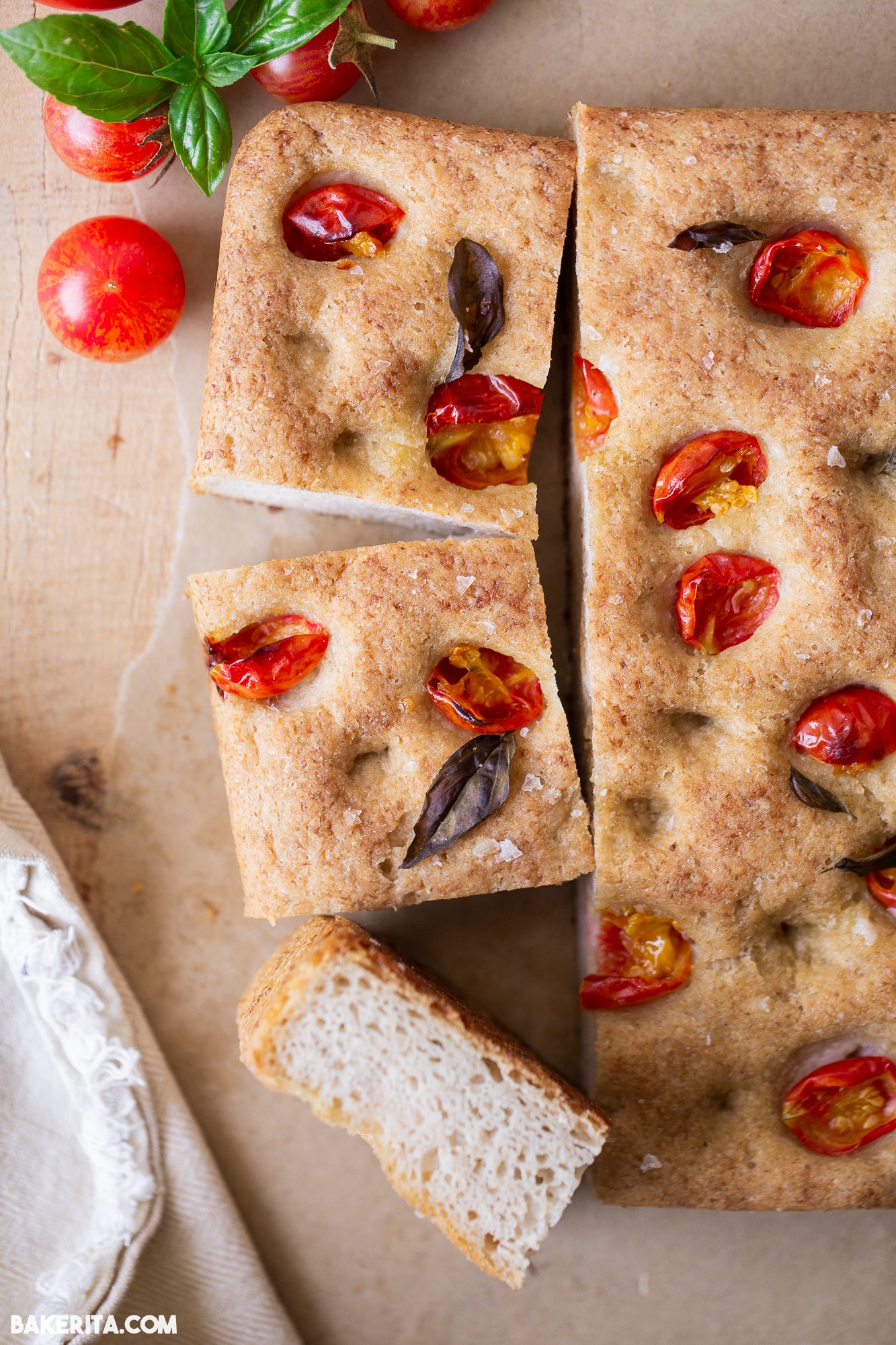
The best focaccia toppings:
In case you need some inspiration, here are some of the best sourdough focaccia toppings to use! Use them alone, or pick a combination.
- Tomatoes (slow roasted or raw)
- Fresh or Dried Herbs
- Cheese (vegan or regular)
- Onions (raw or caramelized)
- Edible Flowers
- Your favorite seasoning blend, like everything bagel seasoning, dukkah, za’atar, etc.
- Caramelized Onions
- Artichoke Hearts
- Roasted Garlic
…and so many more. Whichever you choose, I always recommend a healthy sprinkle of flaky sea salt before it goes into the oven!
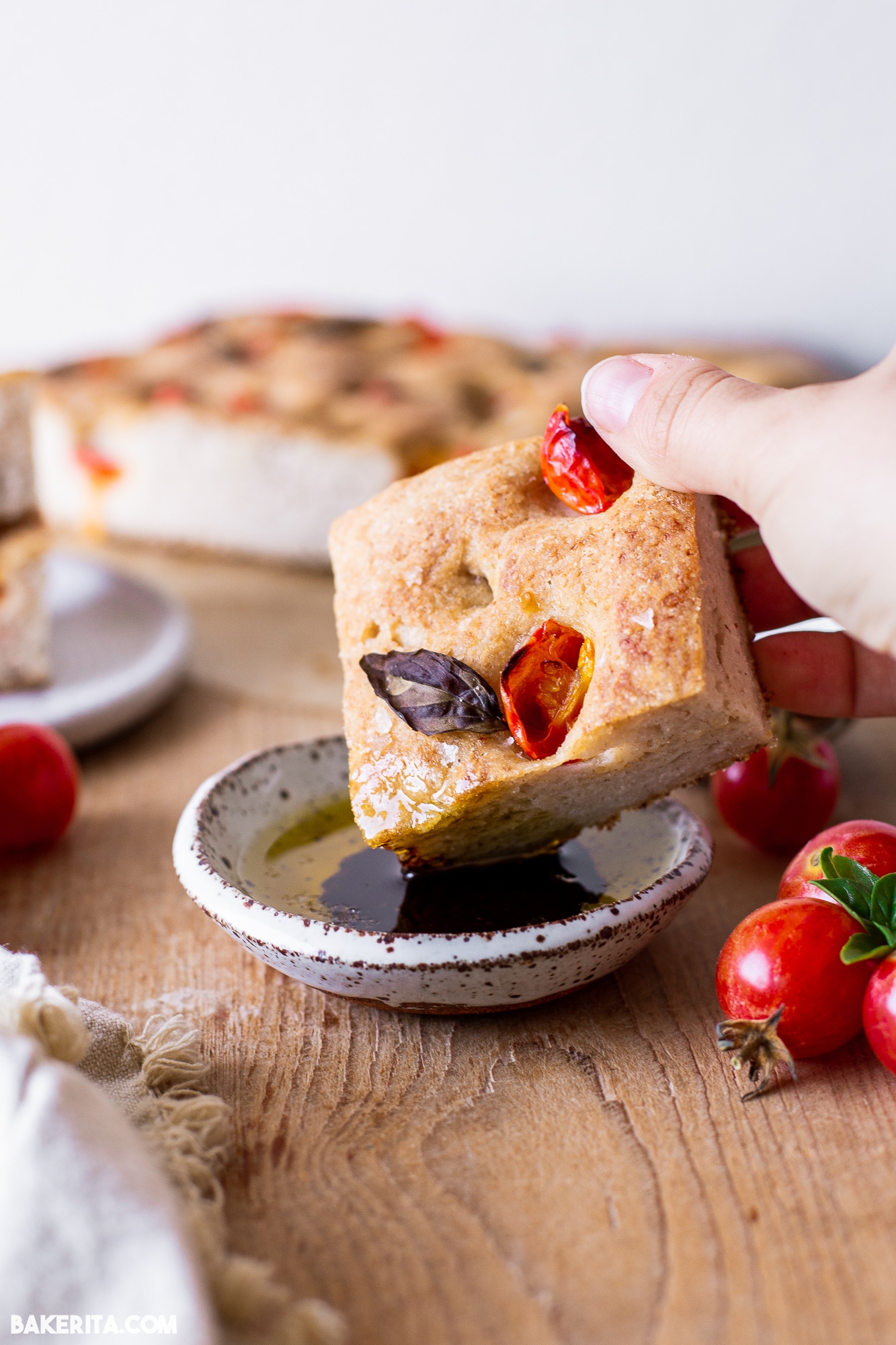
Best ways to enjoy focaccia:
- Dunk into olive oil and vinegar as an appetizer
- Turn into gluten-free sourdough croutons
- Serve with your favorite soup recipe
- Use as delicious sandwich bread
Want more gluten-free sourdough goodness?
- Gluten-Free Sourdough Bread
- Easy Gluten-Free Sourdough Pizza Crust
- Gluten-Free Sourdough Chocolate Chip Cookies
- Gluten-Free Sourdough Scones
Gluten-Free Sourdough Focaccia
Ingredients
- 20 g psyllium husk, see Notes
- 450 g filtered water, room temperature
- 225 g gluten-free sourdough starter, can be active or fresh discard
- 120 g starch of your choice, such as potato starch, tapioca starch, or arrowroot starch. See Notes.
- 215 g gluten-free whole grain flours of your choice, such as quinoa flour, sorghum flour, brown rice flour, or combination. I have tested with these three. See Notes.
- 12 g to 15g sea salt, use the smaller amount if you’re adding salty toppings
- Olive oil, for drizzling on top
- Toppings of choice: herbs, sea flaky sea salt, tomatoes, raw or caramelized onions…be creative!
Instructions
- Grease a 9×9″ square baking pan with olive oil; set aside.
- Combine the psyllium husk and the water in a large bowl or the bowl of a stand mixer. Let it thicken and gel up for about 5 minutes. Add in the sourdough starter and mix to combine.20 g psyllium husk, 450 g filtered water, 225 g gluten-free sourdough starter
- Add in the starch, flour, and salt. Mix until a smooth dough forms. If the dough seems sticky, let it rest for a few more minutes to let the psyllium and flours absorb.120 g starch of your choice, 215 g gluten-free whole grain flours of your choice, 12 g to 15g sea salt
- Press into your prepared pan, or press it into a similarly sized shape on a baking sheet.
- Let rise for 3 to 5 hours at warm room temperature, or for up to a day in the refrigerator. The dough will feel lighter and puffy when it’s ready.
- An hour before you’re ready to bake, preheat the oven to 425ºF.
- When it’s fully risen, drizzle the dough with a healthy glug of olive oil and use your fingers to press dimples into the dough.Olive oil
- Add toppings if desired, or just sprinkle with flaky sea salt.Toppings of choice: herbs
- Bake for 35 to 40 minutes, or until golden brown and baked through. If you’d like to test for temperature, you’re looking for an internal temp of about 210°F (or a little less if you’re at altitude).
- Let cool for 30 minutes and then remove from the pan and allow to cool completely on a wire baking rack (this keeps the bottom from getting soggy).
- Store at room temperature for two to three days, in the fridge for up to a week, or slice and freeze in an airtight container for up to six months.



Does 15g of salt seem like a lot? I wondered why so much. Thx!! (Making it for the first time.)
Hi Annmarie, it’s been tested many times with 15g and it’s always been delish! However, you can use closer to 12 if you’re concerned about the amount.
Thank you so so much for this recipe! I had to go gluten free 3 months ago and all the (regular) sourdough goodness I’ve been baking became something only my family and friends could enjoy. This recipe really saved me. I’ve been using rice and buckwheat flour for the whole grain flour part and it works perfectly. Now I thought I’d try mixing in a little oat flour as well. Excited to see how it’ll turn out.
So glad you’re loving it, Kali! Thanks so much for the feedback.
My dough is not rising. I used potato flakes ground for the starch. Could this be why?
Yes, potato flakes are very different than potato starch and would make the dough a lot denser. There’s a lot of other starter and condition related reasons why the bread may not be rising as well.
Hi! i love this recipe and it turned out mostly great i just have a quick question! i used a 9×9 clear glass pan and i oiled it well. after it cooled for 30 minutes when i tried to remove it from the pan it tore off the entire bottom crust(i could see it from the glass bottom and it was the perfect color and looked so crispy!) do you think this issue could be avoided by using a darker pan next time?
Hi Lexi! I always use a non-stick metal pan for this recipe because it conducts heat better and tends to stick less. You can use glass, but I’d recommend lining with parchment if you choose that. This pan is my favorite: https://amzn.to/3tuPf03. Sorry you missed out on the crispy bottom crust, but glad it was still delicious!
Sooooooo good. Thank you for sharing!! I used brown rice, sorghum, millet, and quinoa flours and potato starch, used a cast iron skillet and let it rise for only about 4hrs before I got impatient. Didn’t rise much but my starter was pretty active. Still turned out perfectly fluffy on the inside with a delicious crispy outside. My 13 year old son said it was the best, that it didn’t taste like sourdough. I’ve been gf for 13 years and started to sourdough this spring and all your recipes are a hit! I love the simplicity.
So glad you enjoyed it, Amanda! Thanks so much for the kind review.
This recipe has become a staple for me! I double it frequently without any trouble. My only advice is that I find quinoa flour gives it a strange flavor, so I use a blend of the other options. I use this for bruschetta, avocado toast, and as a side with soup – loved by GF folks and non-GF people too!
Glad you’re enjoying it, Kirsten!
Hi. I only have an 8×8 pan or a circular 9” pan. Do you think it’ll turn out ok in either of those?
Either will work, it will just be slightly thicker – you can also press it out onto a sheet pan!
LOVE this recipe. It’s my first attempt at making GF sourdough bread and it was delicious. the texture is a little on the sticky side- kind of like mochi bread. Honestly, didn’t mind it and we ate every bit of it. I may need to work on how long I proof. Can’t wait to try out other recipes.
Glad you enjoyed it! Using flours other than rice flour can reduce some of the stickiness :)
Love this recipe and so many people have created successful ones. I know it’s me, but mine is so gummy and I don’t know why. It’s pretty much how all my sourdough stuff comes out. Any advice
Hi Katherine, what kind of flour are you using for this? Try making a loaf without any rice flour (if that’s what you’ve been using) and see if that helps. Also, has the focaccia been rising well? If it’s underproofed, that can also make it gummy.
I’ve made this a few times and it’s been excellent! Wondering what the process is to bake after refrigerating overnight… First time baking it this way and didn’t see additional notes… TIA
Hi Alexis, some people like to bake straight from the fridge. I prefer to let it rest at room temp for about 30 minutes to an hour…however, both seem to work well!
Thank you so much for this amazing recipe. Focaccia turned out beautifully. First proofed it in the refrigerator and then proofed it again in the oven for 6 hours. then baked it and its amazing. Taste and texure are out of this world. Thank you once again for fluffy and light gluten free sourdough focaccia.
So glad you’re loving it, Sirisha! Thanks for the review.