

 by
by 


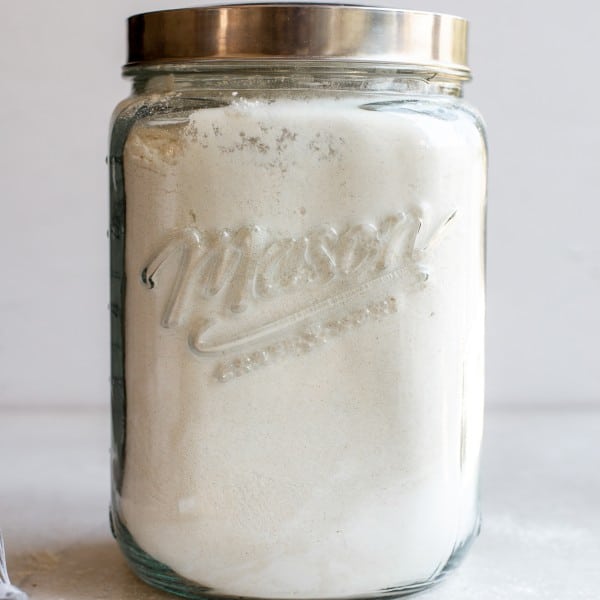
This is my well-tested Gluten-Free Bread Flour Blend for making your own homemade gluten-free bread, flatbread, focaccia, pizza crust, and more! It’s easy to make, scales to how much you need, and has no gums or additives.
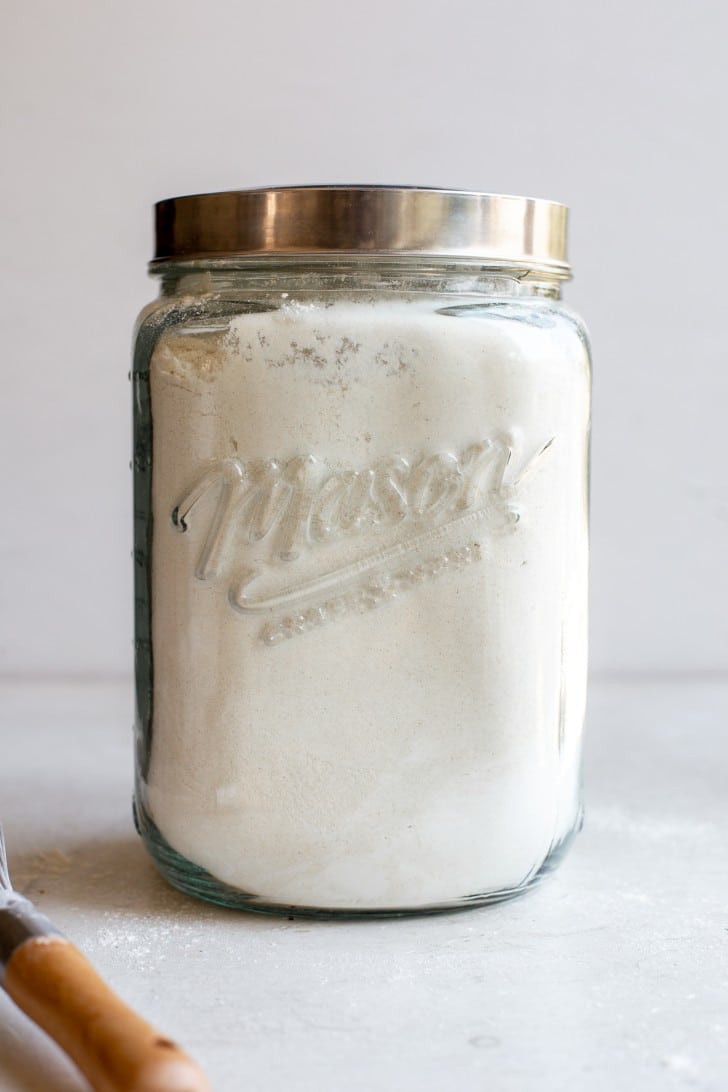
Since I started making my own gluten-free bread recipes, I have recommended to everyone following my recipes to create their own blends for each bread, instead of using pre-made gluten-free bread mixes.
The pre-made mixes which can all be so different and have different additives, like guar gum, xantham gum, added sugars and salts, and other things that can change the texture and flavor of the bread. It’s hard to troubleshoot what’s wrong with a recipe when the main ingredient in bread, the flour, can vary so widely based on which bread flour blend someone is using!
However, I also recognize that ease is so important when it comes to bread making, and measuring out one flour, as opposed to four, can create a lot more ease. SO — I decided it was time to create a gluten-free bread flour blend that works well for all of my gluten-free bread recipes. From the classic gluten-free sourdough (and all of my gluten-free sourdough recipes), to the gluten-free flatbread, to the amazingly fluffy gluten-free bagels, this blend works beautifully for all of them.
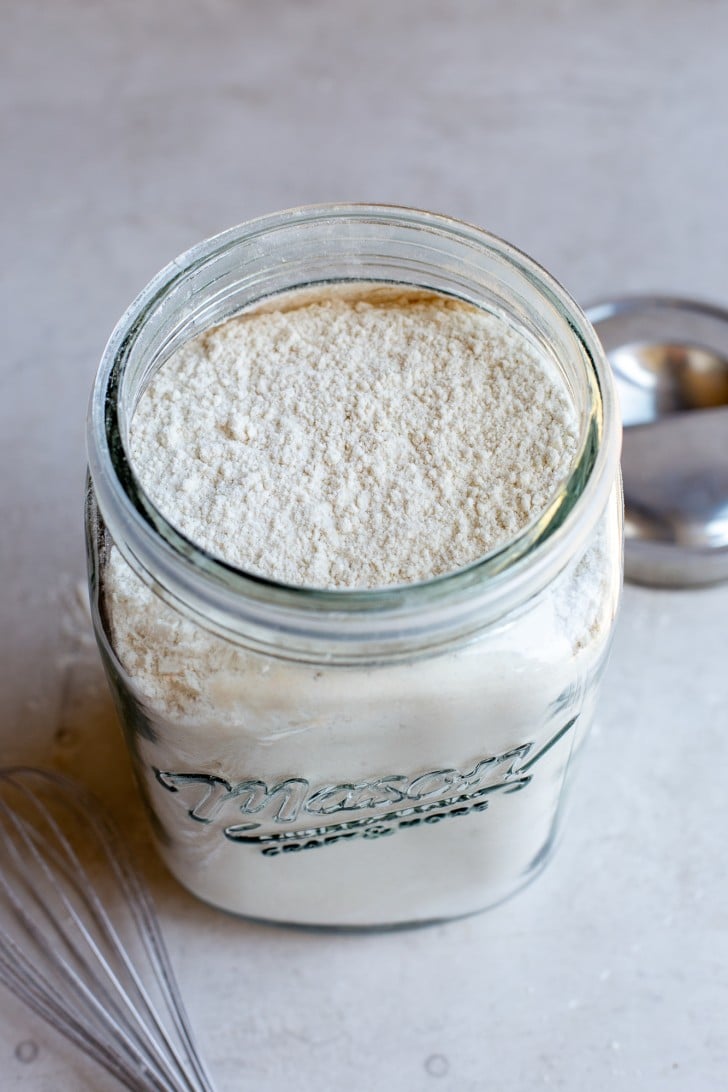
What’s in this gluten-free bread flour blend?
- Brown Rice Flour: white rice flour works well too. You all of one or a combination of both. Superfine will give the best results if you can find it, or order it online. See substitutions below to make this a rice-free blend.
- Sorghum Flour: I love a mild white sorghum flour here. It creates a beautiful fluffy texture.
- Tapioca Starch or Arrowroot Starch: these function in the same way for our purposes. Use whichever you have easier access to! The result will be the same.
- Potato Starch: potato starch is slightly drier than tapioca starch and arrowroot starch, and that can help prevent gumminess.
Can I substitute X flour?
- For the brown rice flour: if you’d like to make this a rice-free blend, feel free to substitute millet flour, teff flour, cassava flour, or buckwheat flour. Each of these act a bit differently and can change the flavor or color of the loaf. Millet is the most neutral and the best for a 1:1 substitution for the rice flour.
- For the sorghum flour: substitute with any of the substitution options listed above for rice flour. You can also use brown or white rice flour.
- For the potato starch: if you’re nightshade-free or avoid potatoes for any reason, you can use an equal amount of tapioca starch or arrowroot starch in it’s place.
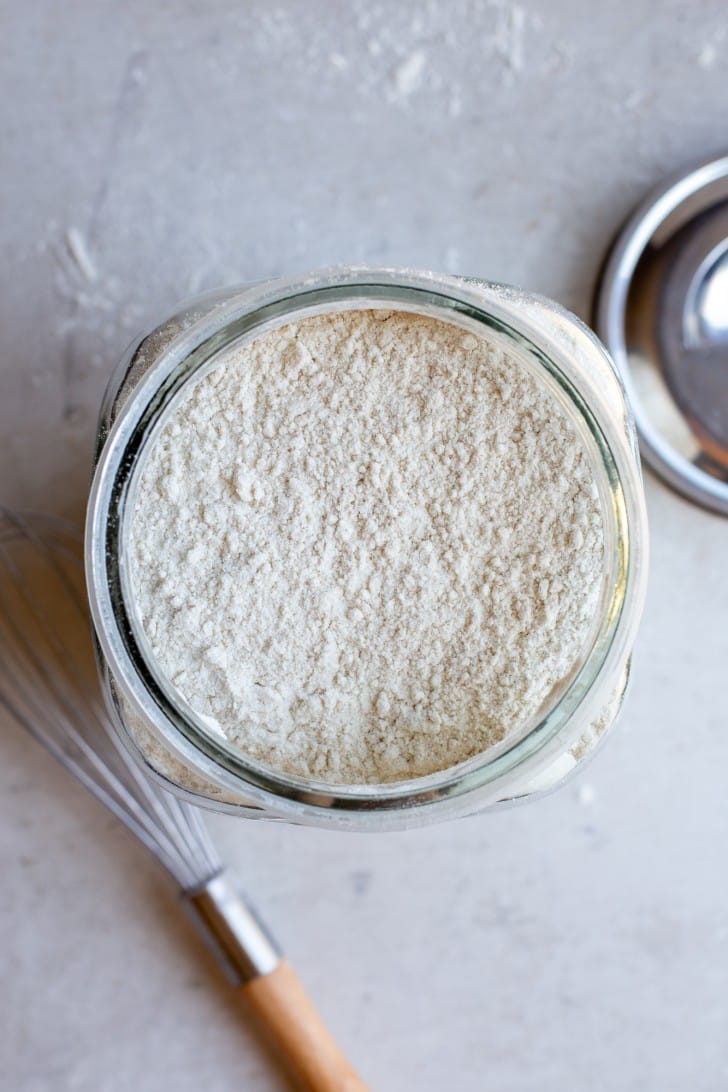
How much does this bread flour blend make?
This gluten-free bread flour blend recipe will yield just under 3.5 pounds of flour (1502 grams). The amount of bread this will make will vary on the recipe used. For my standard gluten-free bread loaf, it will make 3 loaves of bread. For the gluten-free sourdough bread, it will make about 5 loaves.
Should I use this blend for the sourdough preferment? No, I recommend using whole grain flour, like brown rice flour or sorghum flour, for the preferment, since the starches in this blend will be digested more quickly by the starter.
Does it have any gums or additives?
No! We are using gluten-free whole grain flour and starches. No xantham gum or guar gum here, which can be hard on many people’s stomachs and also affects the texture of your bread. My recipes have binders separated (generally psyllium husk) since the amount varies between each recipe.
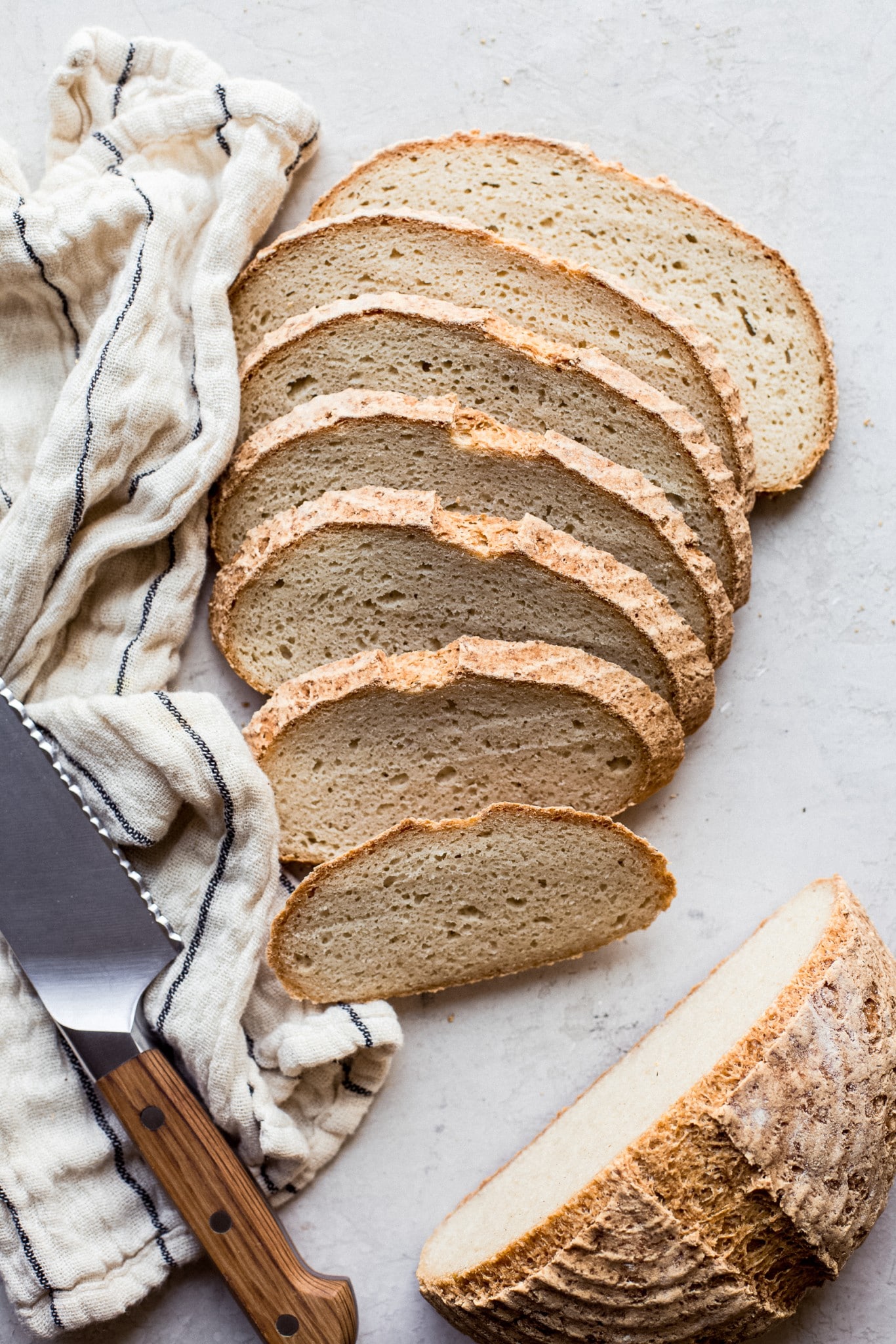
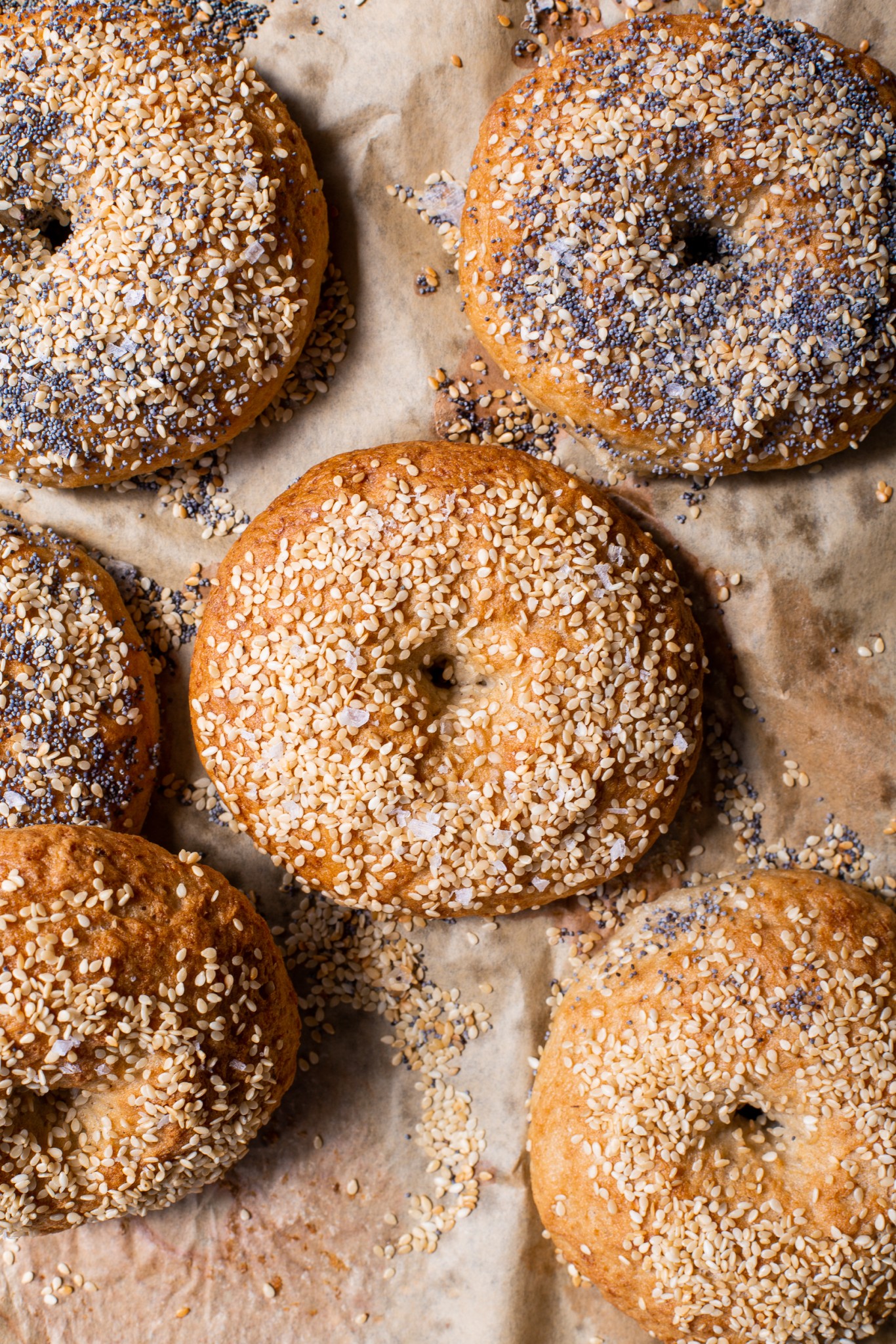
How can I use this gluten-free bread flour blend?
Use it in place of ALL the flour/starches in the following recipes:
Yeast recipes:
- Gluten-Free Bread
- The Best Gluten-Free Pizza Crust
- Easy Gluten-Free Focaccia
- Fluffy Gluten-Free Flatbread
- Gluten-Free Bagels
- Gluten-Free Cinnamon Raisin Bread
Sourdough recipes:
- Gluten-Free Sourdough Bread
- The Best Gluten-Free Sourdough Pizza Crust
- Gluten-Free Sourdough Focaccia
- Rosemary Garlic Gluten-Free Sourdough Rolls
- Gluten-Free Sourdough Bagels
To use gluten-free bread flour: add up the amount of all of the starches/flours called for in the recipe. Replace the entire amount with this gluten-free flour blend.
Flours for the Blend
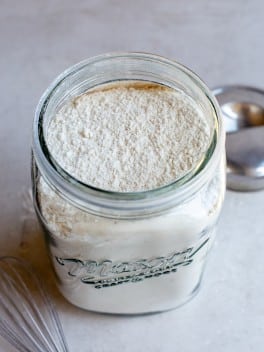
Gluten-Free Bread Flour Blend
Ingredients
- 8 oz. (226g) potato starch
- 8 oz. (226g) tapioca flour, or arrowroot starch
- 18.5 oz. (524g) brown rice flour
- 18.5 oz. (524g) sorghum flour
Instructions
- Whisk all of the starches and flours together very throughly. Store in an airtight container. If you won’t use it quickly, store in the refrigerator or freezer for freshness.8 oz. (226g) potato starch, 8 oz. (226g) tapioca flour, 18.5 oz. (524g) brown rice flour, 18.5 oz. (524g) sorghum flour
To use gluten-free bread flour:
- Add up the amount of all of the starches/flours called for in any of my gluten-free bread recipes and replace the entire amount with this gluten-free flour blend.

I xant have rice flour. What can I replace the brown rice flour with in this bread flour recipe?
Hi Claudette, I recommend looking at the post – I have a whole section on how to substitute each of the flours!
Hi! Thanks for sharing all of your tips and recipes. I have seen on various other blogs that when baking gluten-free breads using a DIY flour blend that it is beneficial to have some sort of protein ingredient included. Do you know if this is true and or any of the flours in your recipe protein based? I am so overwhelmed and just want to create successful loaf of sourdough bread. I have unfortunately wasted lots of expensive ingredients along the way. Thank you for sharing your knowledge.
Hi Marybeth, I haven’t read that but this blend works well for my recipes. I haven’t tried it with any other recipe creators recipes.
Can this flour be used to make cookies?
Hi Linda, it was developed for breads so I actually haven’t tested it for cookies and I’m not sure exactly how it would go.
Hey I need to ask you about your gf flour and starches mix- so once we combine all your flour mix together how many breads can I make? Sorry if it sounds confusing.
It depends on which recipe you’re using! For my gluten-free sourdough, it will make you about 5 loaves of bread. Hope this helps!
You mention for the substitutions that you can replace the brown rice flour with cassava and the sorghum with any of the flours mentioned under the brown rice flour. If that’s the case, can I replace both with cassava flour and just adjust the water to get the right consistency?
Hi Amber, cassava can be a little tricky because it’s pretty dry. I experimented quite a bit with a cassava-dominant loaf and was never super happy with it, so I can’t recommend an exact substitution to make that happen. Of course, you’re always welcome to experiment and see if you can find a ratio you love!
If you substitute rice flour or cassava flour for sorghum flour, is it a 1:1 ratio?
Hi Janice, rice flour is a 1:1 replacement. Cassava is a little tricky because it’s super absorbent, but as long as you’re not replacing all of the flours with it, you can sub it 1:1 for one of the whole grain flours.
Have you ever used this bread flour mix for sourdough loaves ? Thanks
Hi Jessica. Yes, that’s primarily what I use it for and what it is intended for.
Would I replace the preferment amount too or no? In the sourdough recipe. Thanks
I prefer to use whole-grain flour for the preferment.
Do you use superfine brown rice flour or regular brown rice flour in this blend?
I always recommend superfine when available.