

 by
by 


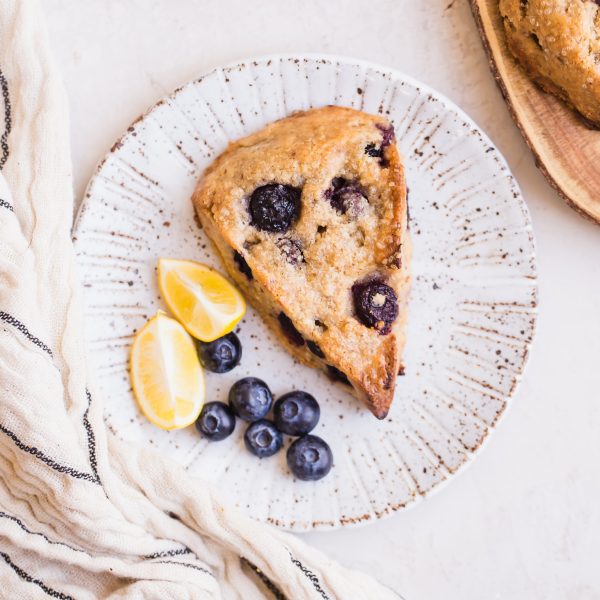
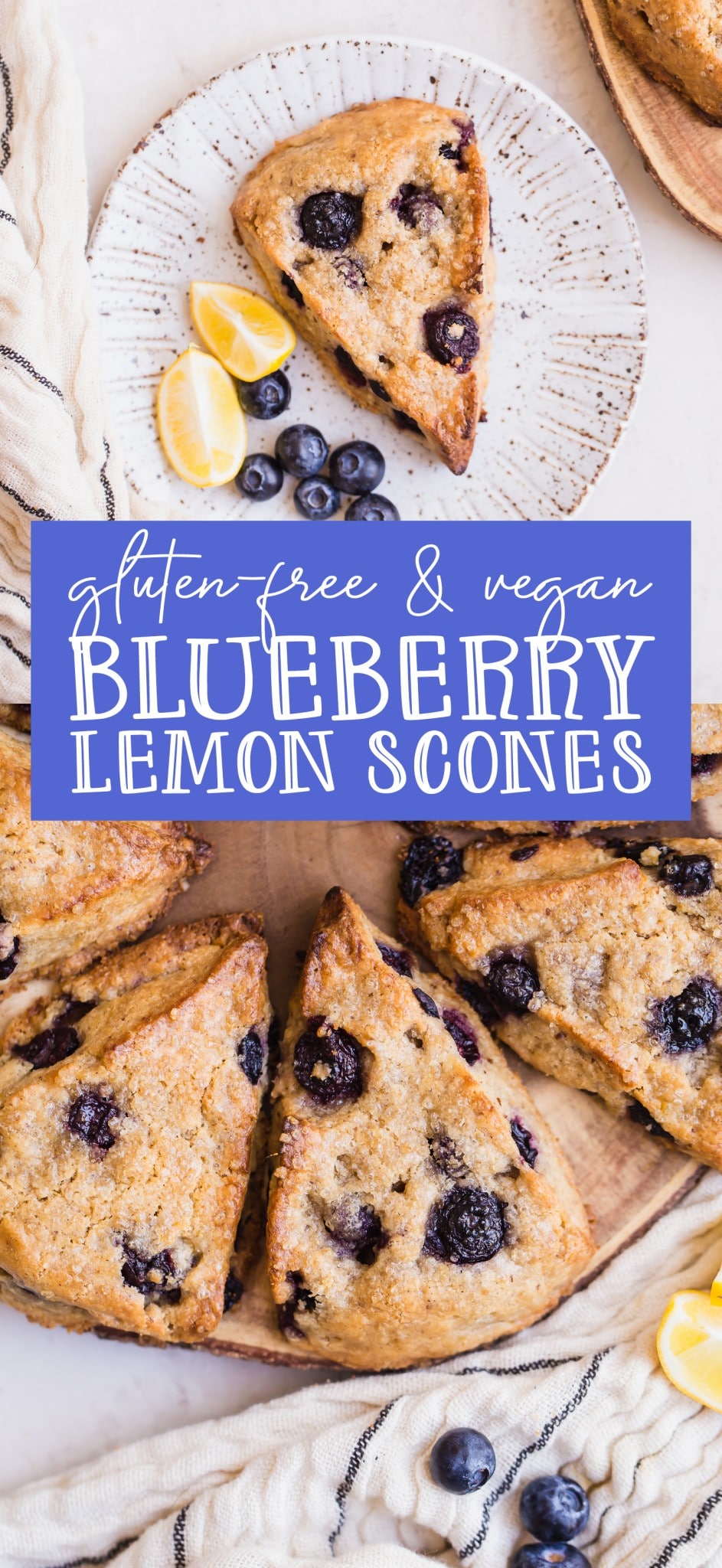
Gluten-Free Vegan Lemon Blueberry Scones are going to become your new favorite breakfast and snack. They have a tender texture with a crispy exterior and are full of bright, lemony flavor.
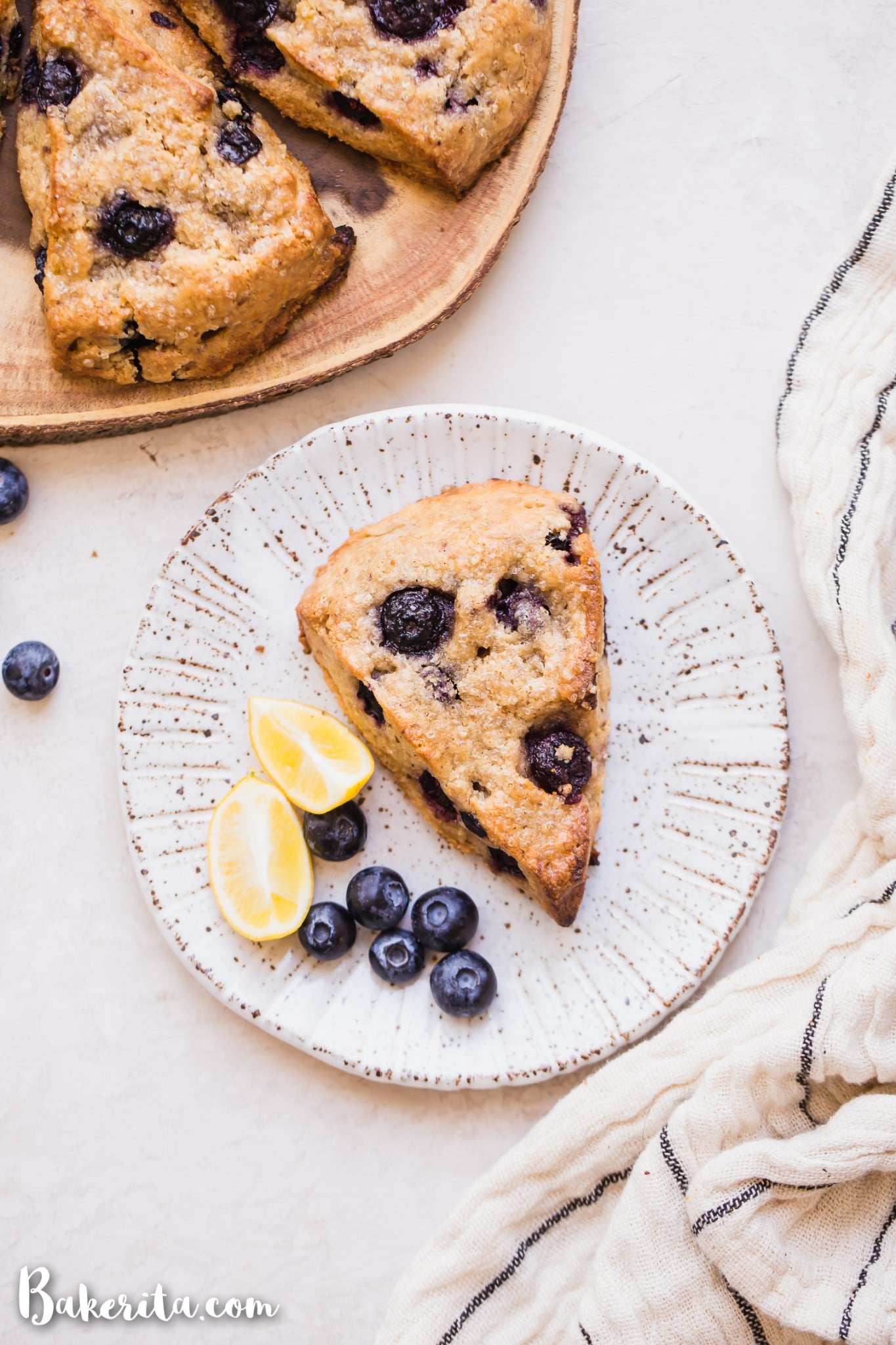
Scones. Often known to be dry, crumbly, not-to-sweet, and usually not too delicious. One of the minor players in the breakfast pastry game, falling way behind croissants, cinnamon rolls, and muffins.
BUT – scones don’t have to be that way. One good scone can change your view of them forever, rebranding them as flaky, tender, flavorful, and absolutely delicious. This is what scones should be…and what these scones ARE.
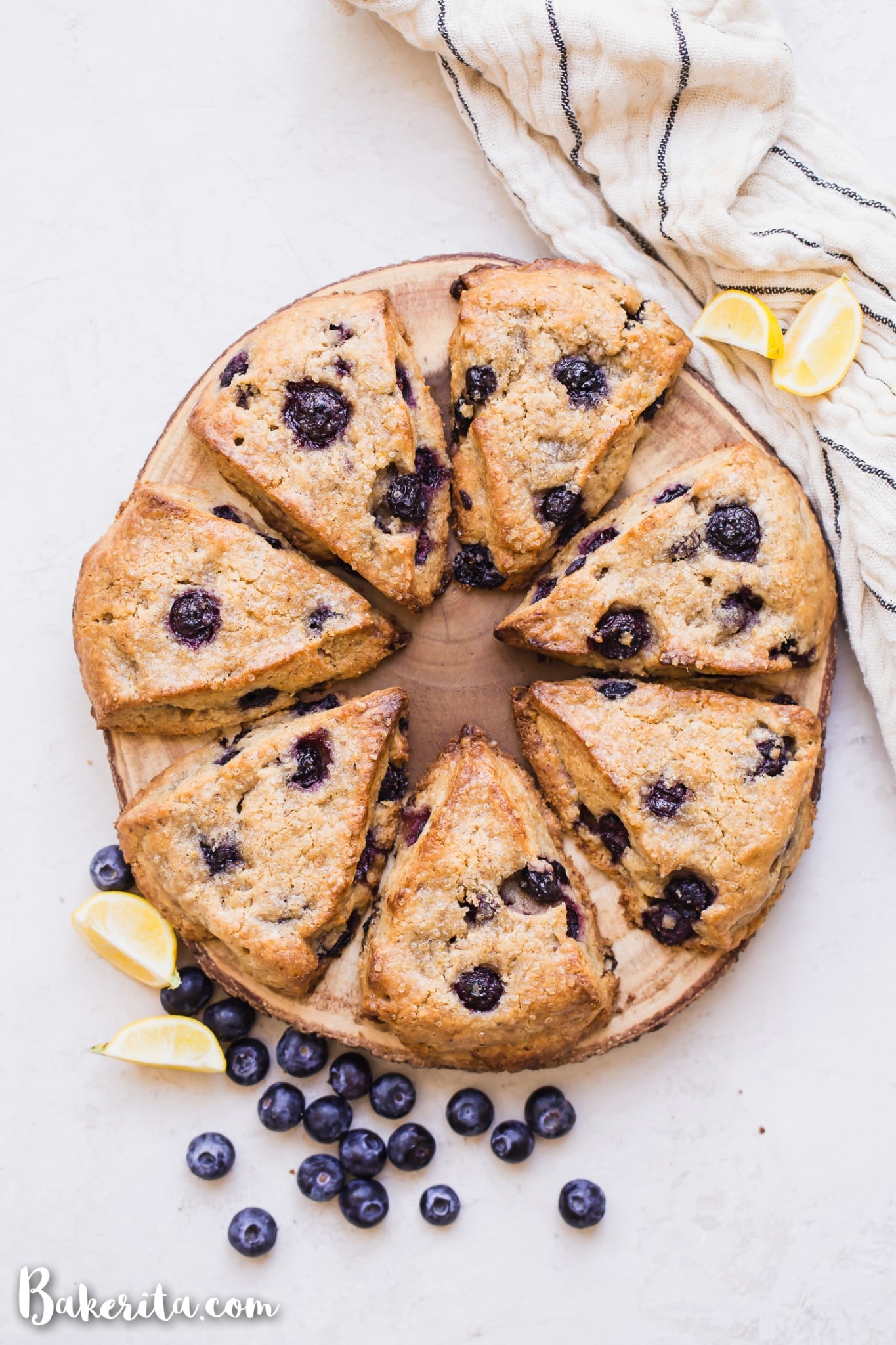
I first developed a gluten-free and vegan scone recipe for my cookbook and have been playing with TONS of different flavors ever since. I am so partial to a deliciously flaky scone and can devour them a few at a time – that’s how luscious they are.
So far, I’ve shared a chocolate chip scone recipe, a cranberry orange scone recipe, and a maple pecan scone recipe. All SO good! It’s time to add one more flavor to the mix, though.
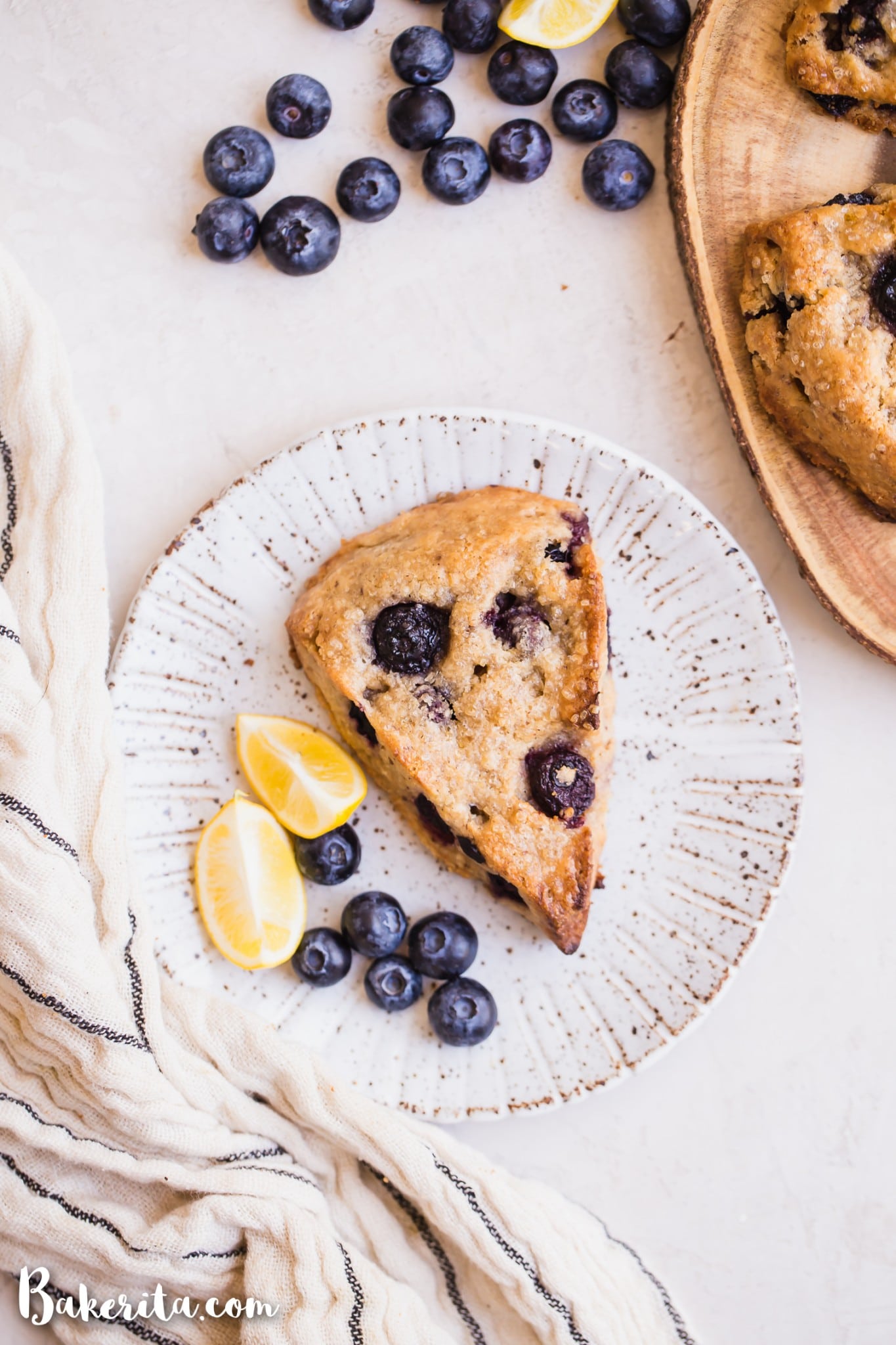
Lemon Blueberry Scones, welcome to the party!
Blueberries and lemon are the perfect flavor combination for Spring and Summer. They bring such a beautiful, light flavor to the scones and they’re pretty simple to make, as well. Let’s get into the ingredients!
For the dry ingredients, we use blanched almond flour, tapioca flour, coconut sugar, baking powder, sea salt, and a little bit of cinnamon. We’ll mix all of those ingredients together, and then cut in the coconut oil, similar to the way you would for a pie crust. You can also do this in a food processor, but I usually keep it simple and use a pastry cutter.
In a separate bowl, you’ll whisk together the wet ingredients: full fat coconut milk, lemon juice and zest, a flax egg, and vanilla extract. Then, you’ll gently mix those ingredients into the wet ingredients until a dough forms, before folding in the blueberries!

A quick hour-long chill in the fridge and then your scones are ready to bake! I like to brush them with coconut milk and sprinkle with turbinado sugar for a little *sparkle* and extra crunchy sweetness on top.
The resulting Lemon Blueberry scones are irresistible!
They’re perfect for breakfast, as a snack, or for dessert. I love slathering them with a little vegan butter for a simple snack, or using a berry jam to add extra tartness. These would also be great with coconut butter drizzled over the top for a glaze.
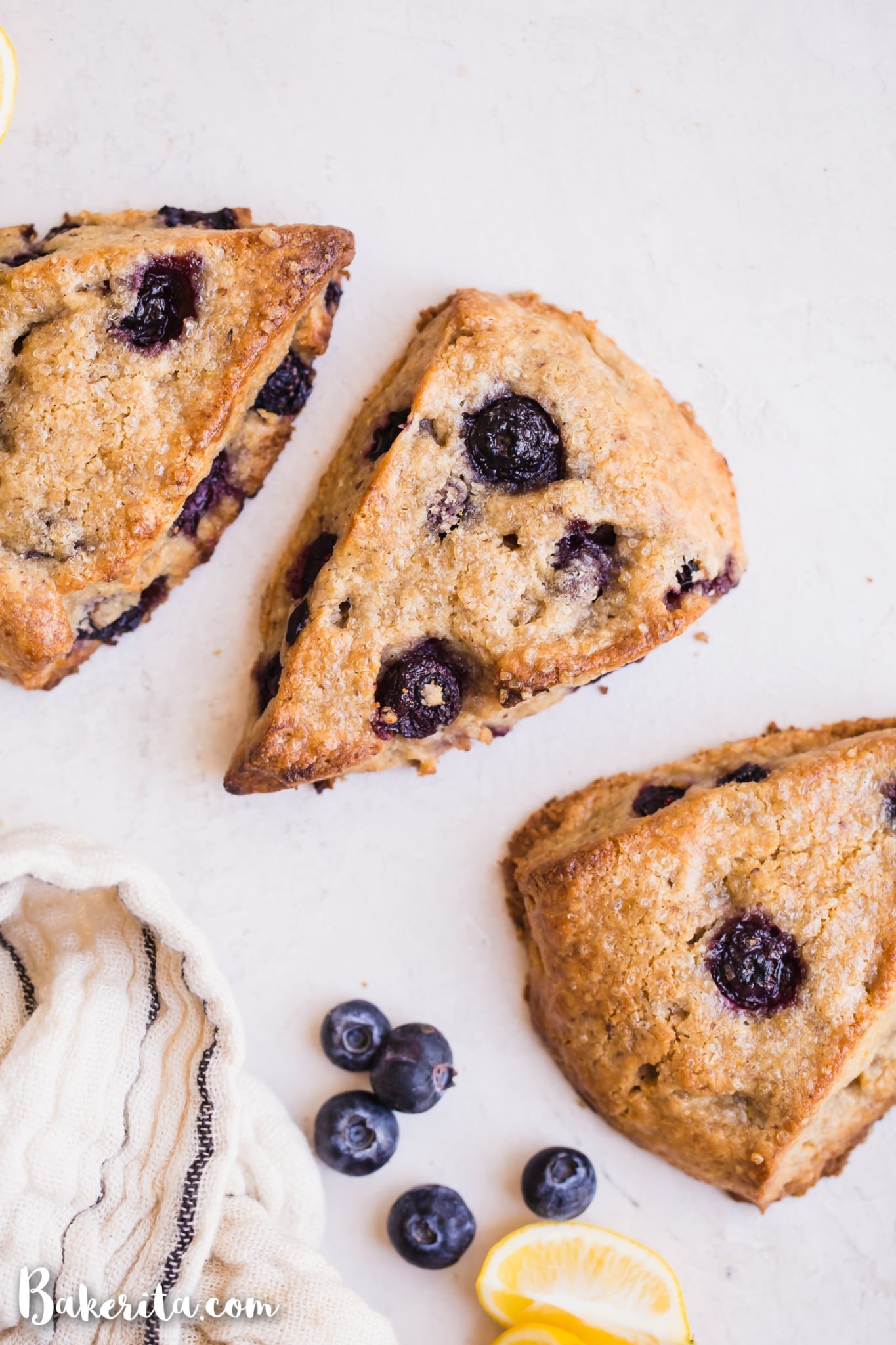
These lemon blueberry scones are:
- Tender
- Crispy on the edges
- Fluffy and soft in the middle
- Tangy and sweet
- Perfectly moist
- Bursting with blueberries!
I hope you adore them as much as we did! They’re great for freezing too if you somehow don’t eat them all the day they’re made :D enjoy, and be sure to leave me a comment below letting me know your thoughts if you decide to try them out!

If you like these, you’ll also love these recipes:
- Chocolate Chip Scones (Gluten-Free, Paleo & Vegan)
- Blueberry Crisp Tart (Gluten-Free & Vegan)
- Lemon Cake (Gluten-Free, Paleo & Vegan)
- Soft & Chewy Vegan Lemon Cookies (Gluten-Free & Paleo)
Gluten-Free Vegan Lemon Blueberry Scones
Ingredients
- 2⅓ cups (224g) blanched almond flour
- ¾ cup (96g) arrowroot flour, or tapioca flour
- ¼ cup coconut sugar
- 1¼ teaspoons baking powder
- ½ teaspoon sea salt
- ½ teaspoon cinnamon, optional
- ½ cup (100g) coconut oil, firm
- ¼ cup full-fat canned coconut milk, plus a little extra to brush on top of the scones
- 2 tablespoons fresh lemon juice, plus zest
- 1 flax egg, see Notes, or use a regular egg if you’re not vegan
- 1 teaspoon vanilla extract
- ¾ cup fresh or frozen blueberries
- Raw turbinado sugar, to sprinkle on top (optional)
Instructions
- In a food processor or large mixing bowl, combine the blanched almond flour, arrowroot flour, coconut sugar, baking powder, salt, and cinnamon, if using. Pulse or whisk together.2⅓ cups (224g) blanched almond flour, ¾ cup (96g) arrowroot flour, ¼ cup coconut sugar, 1¼ teaspoons baking powder, ½ teaspoon sea salt, ½ teaspoon cinnamon
- Add in the coconut oil and pulse or use a pastry cutter or fork to work the coconut oil into the dry ingredients until only very small chunks of coconut oil remain.½ cup (100g) coconut oil
- In a small mixing bowl, whisk together the coconut milk, lemon juice and zest, flax egg, and vanilla extract. Add to the dry ingredients and stir or pulse until completely combined. Stir in the blueberries.¼ cup full-fat canned coconut milk, 2 tablespoons fresh lemon juice, 1 flax egg, 1 teaspoon vanilla extract, ¾ cup fresh or frozen blueberries
- Place a sheet of parchment paper on a baking sheet and dust with arrowroot flour. Put the dough on top of the parchment, dust with more arrowroot flour, and press into a circle, about 1 1/2” thick and 8” across. Place in the refrigerator for at least 1 hour or up to 24 hours to chill. If leaving in the refrigerator for more than a few hours, I recommend wrapping the dough in plastic wrap so it doesn’t dry out.
- When ready to bake, preheat the oven to 375ºF. Cut the circle into 8 scones and separate from each other so they’re not touching. Use a pastry brush to brush the top of the scones with a small amount of coconut milk. Sprinkle with raw turbinado sugar, if using. Bake for 25 to 30 minutes or until golden brown.Raw turbinado sugar
- Serve warm or let cool completely before serving. Store in an airtight container in the fridge for up to a week.



These were awesome, thanks so much. I substituted stevia/monkfruit powder for the coconut sugar and used reduced fat coconut milk. Will be making these or the chocolate chip or apple cinnamon scones again soon!
So glad you loved them, Paula!! Hope you love all the scones you try :D
Hi – I’m excited to make another batch of your scones but I don’t have blueberries. What could I use instead and still have a delicious result that isn’t too dry for not having juicy blueberries bursting inside? This lockdown is making me want to bake all day long.
Hi Josie, any kind of berry you like will work well here!! :)
Hi. What can I substitute the flax egg? Can it be an actual egg?
Hi Gabriela, yes, a real egg will work here!
Such a forgiving recipe! I started and realized I didn’t have enough tapioca- I used a combo of almond flour, tiger nut, cassava and tapioca and they came out great! They’re a wonderful subtly sweet treat!
So glad they turned out deliciously, Lindsay! Thanks for the feedback :D
Hi, I have an almond allergy. Could I substitute hazelnut or a different gluten free flour for the almond flour?? These sound and look amazing!
Hi Terri, absolutely! Hazelnut flour, cashew flour, or sunflower seed flour would be great subs here :) some people have also subbed oat flour!
When using oat flour as a replacement for the almond flour is it a 1:1 ratio? So 2 1/3 cups (224g) or would it be different? Also can you use this as a replacement for your other scone recipes? Thanks!
Hi Mary, oat flour is usually more absorbent than almond so I prefer to use about 3/4 of the amount called for. You can always add a little more if the texture seems too soft, but you can’t take it away!
Thank you! Do you think oat flour would work for any of your scone recipes?
What a yummy recipe!! First time making scones and I made them last minute to bring to neighbor’s get-together. I love when the ingredients are things I have on hand. So delicious!! Next up your chocolate chip ones.
So glad you’re loving them Andrea!!
Can I freeze these scones?
Yup! Just store in an airtight container and keep in the freezer for up to 6 months.
Bakerita, you did it again! Another great recipe! These are delicious. Great texture and great flavor. Thank you!
So glad you love it, Ginny!
Most buttery and delicious vegan gf scones I’ve ever had!
I’m so so glad you loved them!
These are so delicious!!
But mine also spread like cookies. And they were a little bit oily. But I never made scones before, so I don’t know if they’re supposed to be like that. I used firm coconut oil as the recipe called but I kept the scones wrapped in the fridge for 2 days before baking them.
Anyway, they taste very good even having cookies consistency
Hi Maya, they shouldn’t spread too much or be too oily. Is it possible the flour was under measured? That could lead to both of the problems you’ve described here.