

 by
by 


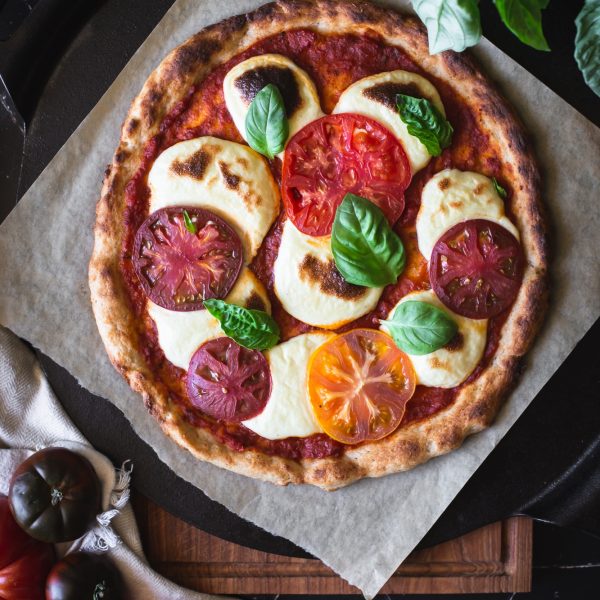
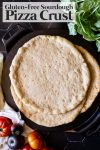
This Gluten-Free Sourdough Pizza Crust requires just six ingredients, 10 minutes, and one bowl needed to mix up the dough! This easy sourdough discard pizza dough recipe is also vegan, and couldn’t be easier to make. Thanks to Lodge Cast Iron for sponsoring this post!
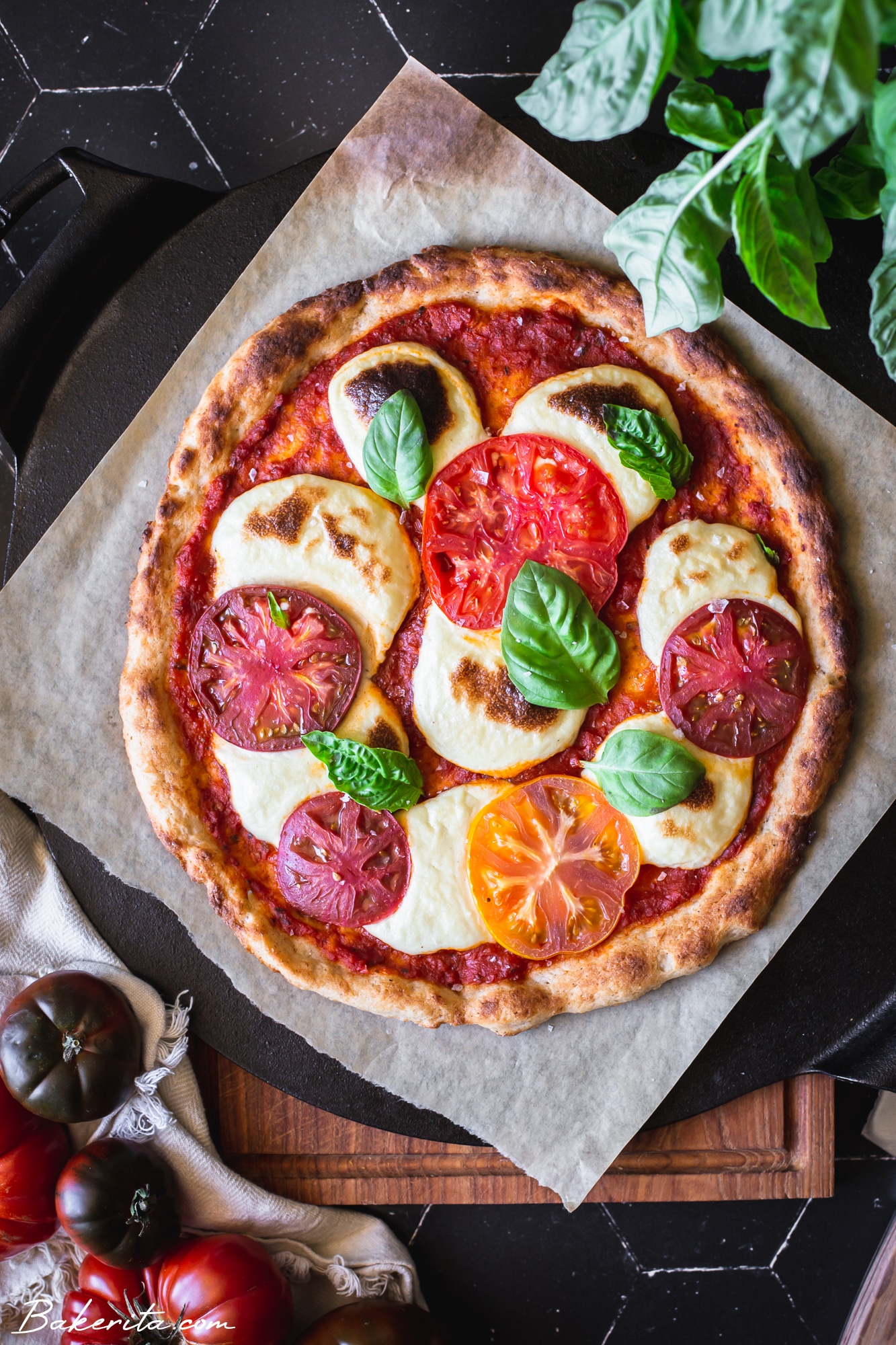
I am SO excited to share this Gluten-Free Sourdough Pizza Crust recipe with you today. Since I shared my gluten-free sourdough bread recipe, I have heard from so many first-time sourdough bread bakers who are having so much fun learning how to make gluten-free sourdough. It’s so much fun, and so empowering to be able to make your own bread. I’ve heard from so many readers who have gotten totally obsessed with making bread now, just like I did.
But eventually, you’ll want to branch out to other ways of using your sourdough starter and your sourdough discard. Maybe you want to try something like these Sourdough Chocolate Chip Cookies, or these Gluten-Free Vegan Sourdough Scones? Both good options, but my new obsession has got to be this recipe for gluten-free and vegan sourdough pizza crust. It’s all the things you want:
- Easy to make
- Only needs SIX ingredients!
- One bowl
- Ten minutes prep time
- Can use active or discard starter
- Can be thin & crispy or thicker & fluffy
- Baked on the Lodge Cast Iron Pizza Pan so it has a super crispy bottom
- Holds up well to toppings
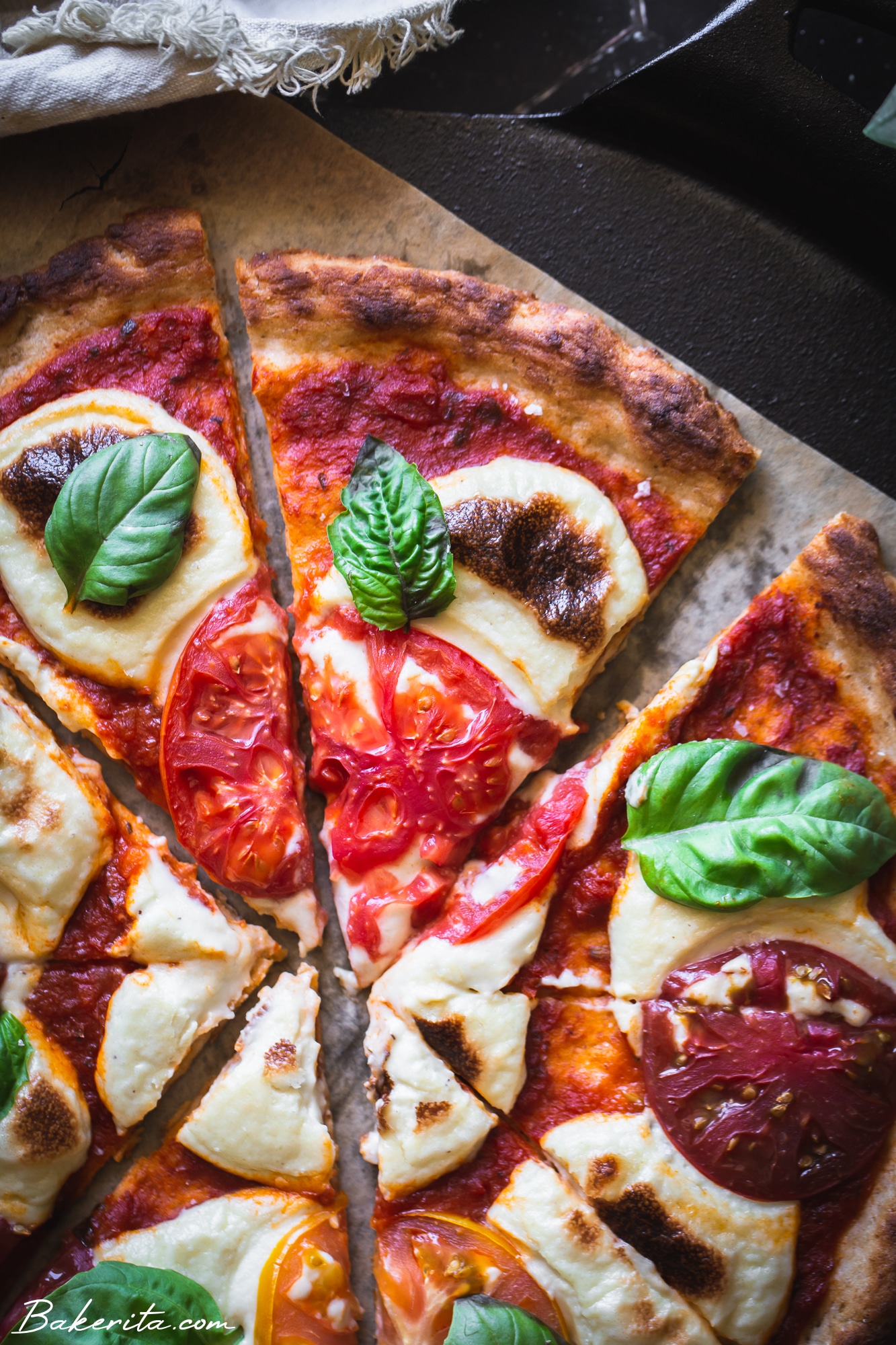
I’m so excited to partner with Lodge Cast Iron for this post! Their USA-made products are so affordable, so high quality, easy to care for, and their bakeware line is perfect for making all things gluten-free sourdough. The Pizza Pan we use in this recipe helps us get the perfect crispy crust.
This recipe is AMAZING. Our family just recently went gluten free for a couple family members, and I’ve been trying to do gluten free sourdough, and this is the best gluten free substitute I’ve found so far. This tastes pretty much exactly like regular pizza crust….This recipe is definitely a keeper.
Comment from Lady E
What’s in gluten-free sourdough pizza crust?
Okay, you know how I mentioned this recipe only calls for six ingredients? Well, two of those ingredients are salt and water, which barely count. So really, you’ve only got four ingredients! Here’s what you’ll need:
- Gluten-Free Sourdough Starter: I have instructions in my Instagram highlights for how to make one! The starter does not need to be active, it can be after the full rise and fall of the starter. However, I wouldn’t use old discard, like one that’s been sitting in your fridge for a few days.
- Psyllium Husk: this acts as the gluten in this recipe. It gives the crust a nice chew and helps make the dough easier to work with. You can read more about psyllium husk’s role in gluten-free bread baking in this post.
- Water: when mixed with the psyllium, these will form a gel that will help make a smooth, hydrated, workable dough! I prefer using filtered water.
- Starch: I’ve done most of the recipe testing with potato starch, but tapioca flour or arrowroot flour will also work well here!
- Gluten-Free Whole Grain Flours: I’ve used brown rice flour, quinoa flour, and sorghum flour in the test here. Any whole grain gluten-free flour should work well.
- Salt: I like using sea salt or pink salt
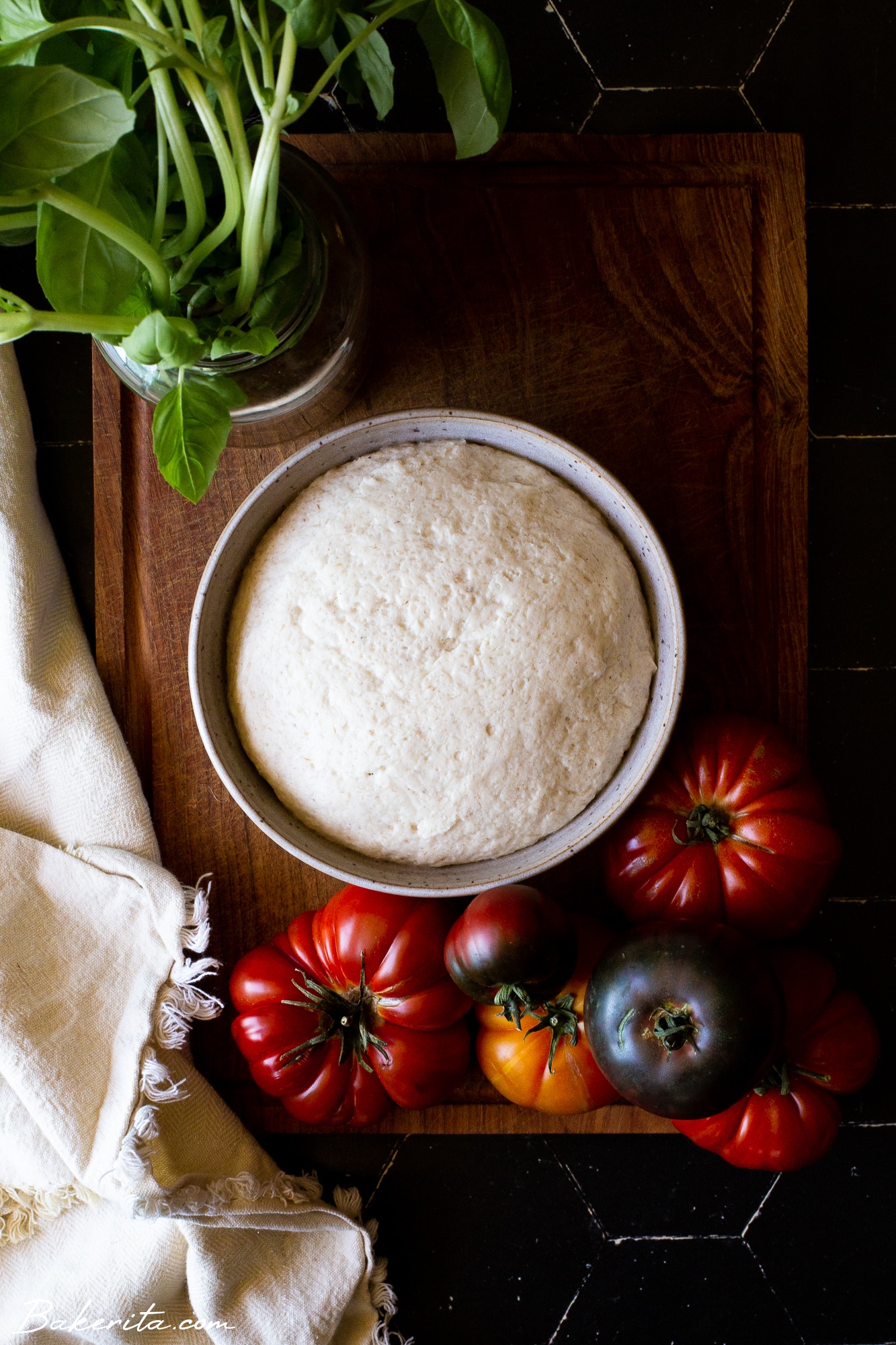
How do I make the dough?
- Combine the psyllium husk and the water, and let it thicken.
- Add in the sourdough starter and mix to combine.
- Add in the flours and salt. Mix until a smooth dough forms.
- If you want a thick crust, leave the crust in one ball and move to a greased bowl to rise. If you want thinner crusts, divide the dough into two, form into balls, and place in separate greased bowls to rise.
- Let rise for 3 hours at room temperature, or for up to a day in the refrigerator.
How long does the dough have to rest?
The dough should rest for about 3 hours, or overnight/many hours in the fridge before you press it into shape. The exact timing is more forgiving than the bread recipe, you just want to see some puffy lightness happening in the dough!
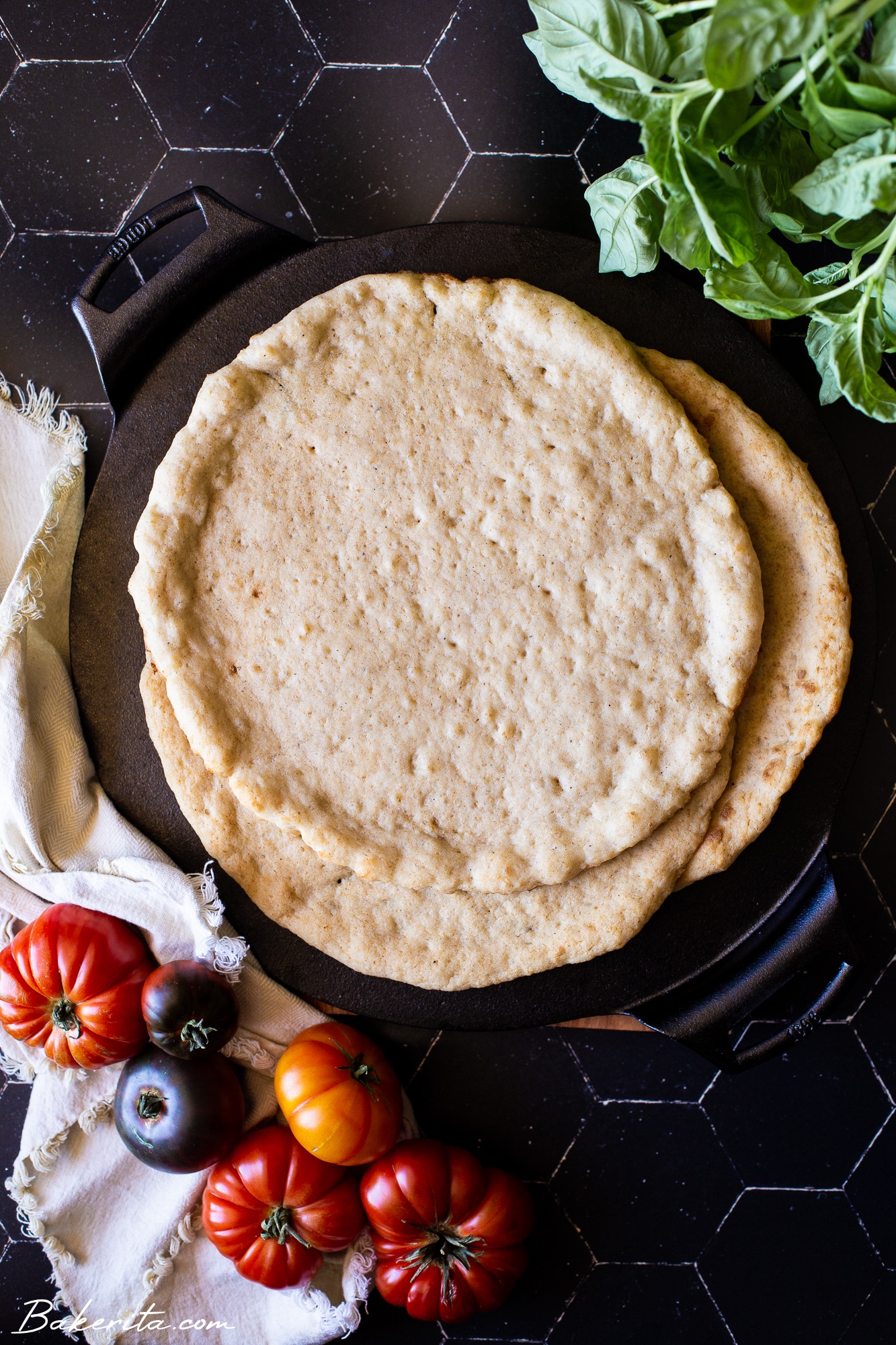
What’s the best way to shape the dough?
When you’re ready to bake, preheat the oven with the Lodge Cast Iron Pizza Pan inside, and then lightly grease a sheet of parchment paper. Flip the dough out onto the parchment. Drizzle the dough with some oil if needed to help it spread more easily.
Use your hands or a rolling pan to press the dough out into a circle, working from the inside towards the outside. You should be able to press it into shape pretty easily! It doesn’t need to be perfect, and remember, the texture of the dough will seem different than traditional pizza dough, because the lack of gluten makes it stretch in a different way!
Let’s bake!
I know it’s hard to replicate the crispy crust you get from good restaurant pizza. I’ve tried so many times over the years, and since I want things **crispy** to the max, it’s never quite there. BUT – I have a pizza baking game-changer, and it makes all the difference in getting a super crispy crust: the Lodge Cast Iron Pizza Pan.
Lodge Cast Iron is a long-time favorite in my house: I love that they’re made in the USA, come seasoned and ready for use, and literally get better as they age. I have had my cast iron skillet since college, and she’s very well-loved!! I know this Pizza Pan will get the same kind of love and attention for as long as I’m making sourdough…and even if I stop, I’m sure I’ll be baking up this loaded vegan paleo pizza crust instead! The Pizza Pan is part of their bakeware line!
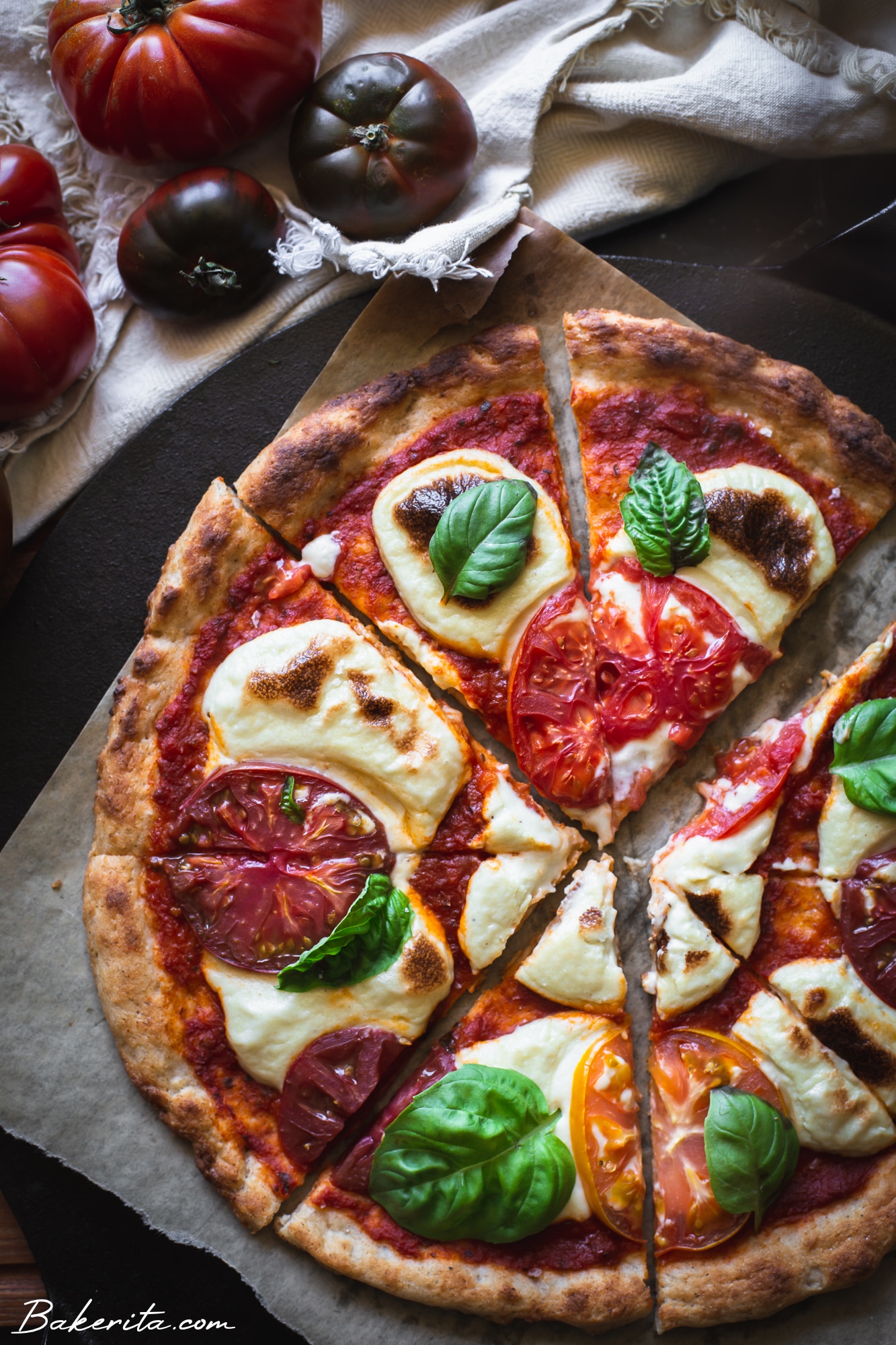
Let’s talk about why it’s so special for pizza crust baking. Because cast iron is heavy and super sturdy, it conducts heat really well. So, when you preheat the Pizza Pan in a crazy hot oven, it can not only take the heat, but it will heat up itself. It’ll get REALLY hot, so when you transfer your dough very very carefully onto it, it will immediately start cooking the bottom, help the dough crisp up instantaneously. By conducting all that heat through the iron, you’ll get a nice crispy crust super quickly.
For the safest and easiest way to get the dough onto the hot Lodge Cast Iron Pizza Pan, I like pressing the dough out into its shape on a piece of parchment paper that’s on a big cutting board (which allows me to move it right next to the hot pan) and then sliding the whole sheet of parchment onto the pan to bake. Doing this means you can’t bake higher than 450F, or the paper will burn, but it makes it much easier to transfer the dough cleanly.
Once your gluten-free sourdough pizza crust is on the Pizza Pan and in the oven, it will need to bake for about 8 to 12 minutes, depending on how crispy you want. I like getting it a little golden on the edges, and firm enough to slide around easily on the pan. Remember – you’ll be baking it again with toppings!
Once it’s ready to go, remove it carefully from the oven, add all of your pizza toppings, and bake for a few more minutes until the toppings are golden. If you want, you can slide the pizza crust off the parchment paper before you add toppings and bake right on the pan. This allows you to use a higher temperature to get a crispier pizza too if that’s what you’re into!
Once your toppings are golden and your cheese is melted, slice up your gluten-free sourdough pizza masterpiece and enjoy your magical creation!!!
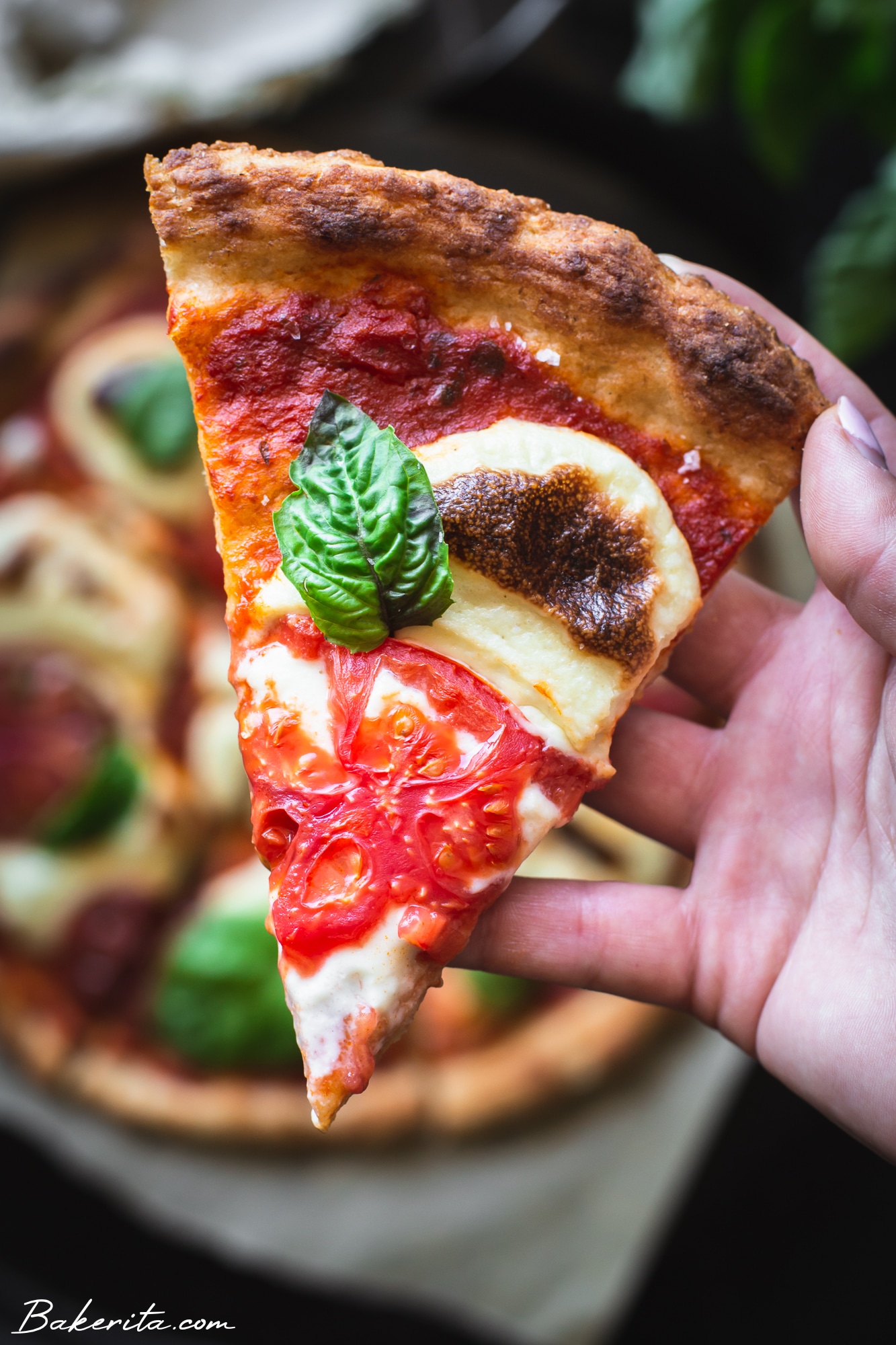
Gluten-Free Sourdough Pizza Dough FAQ
Why do you need to pre-bake the crust?
The gluten-free crust needs to be baked before the toppings are added to ensure any excess moisture is drawn out of the dough, which helps it to crisp up. It helps prevent the dough from getting soggy.
What are the best toppings for this crust?
Whatever your heart desires!! You can go for any kind of toppings you like on this pizza :)
Does this recipe make a thin or thick crust pizza?
Either! If you choose to use the full sourdough pizza dough recipe for one pizza, you’ll get a thicker, fluffy, but still-crispy-on-the-bottom pizza. If you divide the dough in half, you’ll get a thinner, crispier crust.
Can I freeze homemade pizza crust?
YES! This crust freezes very well. I par-bake the sourdough pizza dough until it’s just firm enough to slide around the pan on its own, just the faintest golden brown. Let it cool completely, and then seal it as best you can, in a zip bag, plastic wrap, or best of all, vacuum-sealed. Keep in the freezer until ready to use, or up to 3 months.
When you’re ready to use, let the sourdough pizza crust thaw to mostly room temperature, and then add your toppings and bake as usual.
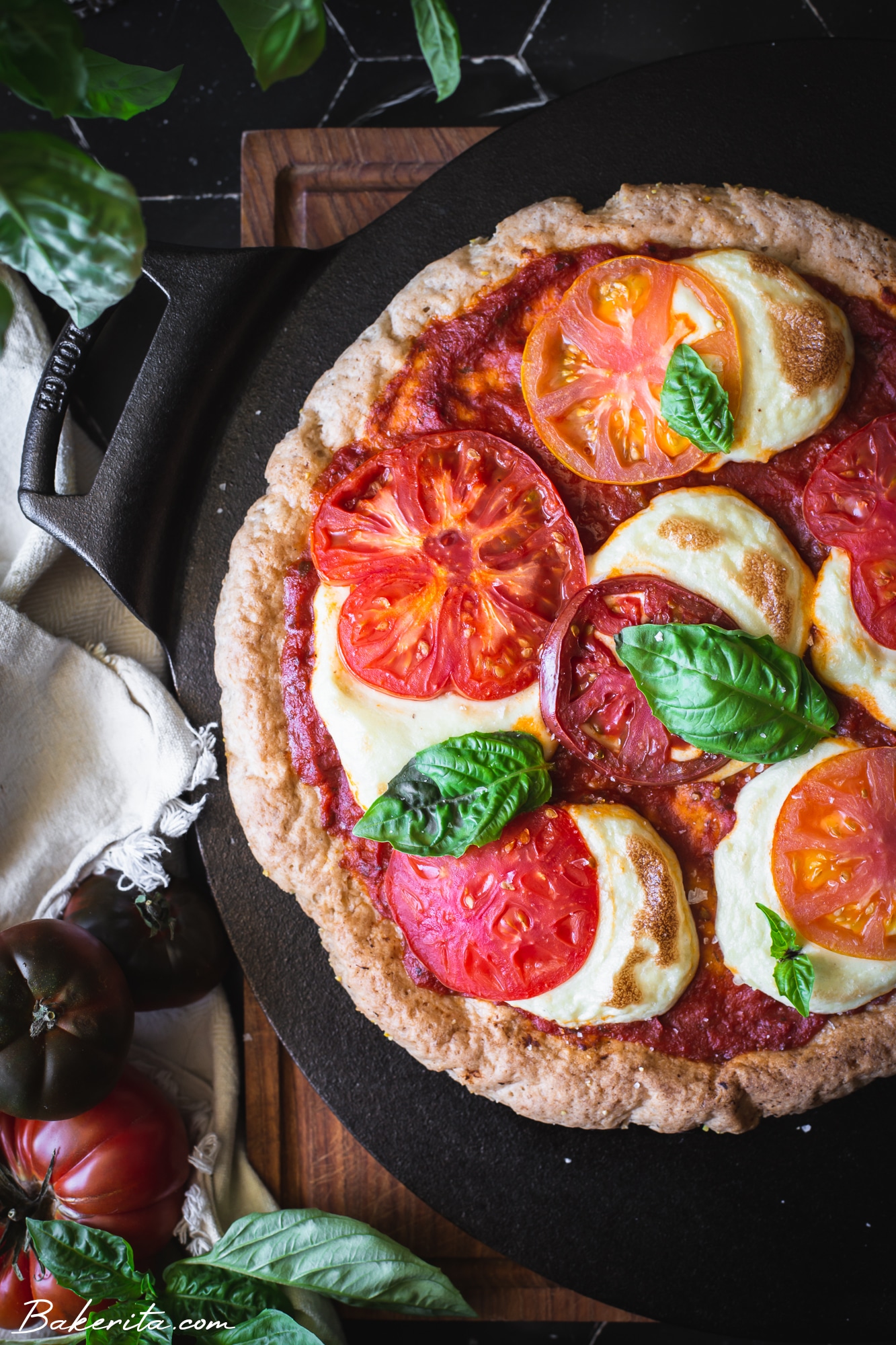
I hope you love this recipe as much as I do! It’s a definite staple in my house, and I can’t wait to experiment with all different sorts of toppings. My Lodge Pizza Pan is soon to be very well loved. Enjoy, and leave a comment down below to let me know what you think!
Other favorites you may like…
- Gluten-Free Vegan Pizza with Mushrooms & Onions
- Gluten-Free Sourdough Bread
- Vegan Caesar Salad
- Gluten-Free Sourdough Chocolate Chip Cookies
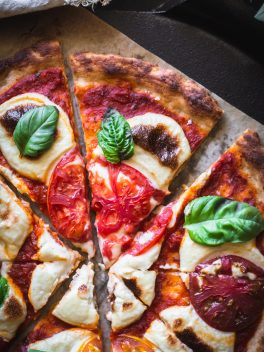
Gluten-Free Sourdough Pizza Crust
Ingredients
- 12-15 g psyllium husk, see Notes
- 300 g filtered water, room temperature
- 150 g gluten-free sourdough starter, can be active or fresh discard (see Notes)
- 80 g starch of your choice, such as potato starch, tapioca starch, or arrowroot starch
- 145 g gluten-free whole grain flours of your choice, such as quinoa flour, sorghum flour, brown rice flour, or combination. I have tested with these three.
- 10 g sea salt
Instructions
- Combine the psyllium husk and the water in a large bowl or the bowl of a stand mixer. Let it thicken and gel up for about 5 minutes.12-15 g psyllium husk, 300 g filtered water
- Add in the sourdough starter and mix to combine.150 g gluten-free sourdough starter
- Add in the starch, flour, and salt. Mix until a smooth dough forms. If the dough seems sticky, let it rest for a few more minutes to let the psyllium and flours absorb. Depending on how much psyllium you use, your dough will be pretty soft but should be workable. More psyllium will make it firmer and a bit easier to work with at this point.80 g starch of your choice, 145 g gluten-free whole grain flours of your choice, 10 g sea salt
- If you want a thick crust, leave the crust in one ball and move to a greased bowl to rise. If you want thinner crusts, divide the dough into two, form into balls, and place in separate greased bowls to rise.
- Let rise for 3 hours at room temperature, or for up to a day in the refrigerator.
- When you’re ready to bake, preheat your oven with the Lodge Cast Iron Pizza Pan inside to 450°F.
- Lightly grease a sheet of parchment paper and place it on a large cutting board or sheet pan. Flip the dough out onto the parchment. Drizzle the dough with some oil if needed to help it spread more easily.
- Use your hands or a rolling pan to press the dough out into a circle, working from the inside towards the outside. You should be able to press it into shape pretty easily! It doesn’t need to be perfect, and remember, the texture of the dough will seem different than traditional pizza dough, because the lack of gluten makes it stretch in a different way.
- Once it’s shaped, move the cutting board or sheet pan right next to the hot Pizza Pan. Slide the whole sheet of parchment, with the crust on top, onto the pan to bake.
- Pre-bake the crust without toppings for about 10 minutes, depending on how crispy you want it. I like getting it a little golden on the edges, and firm enough to slide off the parchment paper.
- Once it’s ready to go, remove it carefully from the oven. Slide the crust off the parchment and directly onto the pizza pan. Add all of your pizza toppings, and bake for 5 to 10 more minutes, or until the toppings are golden and the cheese is melted.
- Remove from the oven, slice and serve immediately. Enjoy!



Oh wow. Thank you for sharing this recipe. It was super easy to follow (I’m new. I made a starter and have only tried one bread recipe so far). I did let it rise a bit longer than advised.. and it really took off when i sat it on top of the warming oven.
Just a delightful crust. My husband said it was the best gf crust he has ever had, and it was even better when reheated it in a skillet the next day.
I will surely be making this again and again. and again.
So thrilled you loved it, Lily! Thanks so much for the feedback and review.
Honestly, I’ve always like pizza better than he does. But he said he would eat this once a week! It was so fulfilling too!
Best GF pizza crust I’ve made. Great texture and flavor. Another winning recipe from bakerita.
So thrilled you’re loving it!! Thanks so much for the review, Loretta :)
I followed the recipe and instructions, I only did 5g salt though. And I had psyllium husk powder so I used 12g (80% of the 15g I was aiming for. I discovered I had the wrong kind too late). The dough was very liquidy even after giving some extra time for the ingredients to absorb. I ended up adding more flour to get it to a dough consistency. Any idea why it would be so liquidy?
Hi Katie, super odd! Any chance you used coarse flours? Those don’t absorb liquid as well so you can end up with a much softer dough.
I made this yesterday with my gf sourdough discard. I substituted flax meal for the psyllium husks and King Arthur gluten-free bread flour. I did throw in a packet of instant yeast because my discard had been in the fridge a few days.. It was great- hubby ate it up and didn’t notice it was gf.
So glad it worked well! Thanks so much for sharing that these changes worked well :)
Another great tried and true sour dough recipe. Decided to switch my dinner plan to pizza after I’d already made my preferment for sour dough loaves. Adjusted my flour and water amounts for what I’d used there and mixed up the rest as written. Turned out beautifully!!
So glad you’re loving it, Colette! Thanks for the feedback.
I’m speechless at how great this turned out! I’ve researched other recipes and ended up doing yours, and it is a winner! Super easy and tasty beyond expectations! It tasted basically like the real deal – even my non-celiac boyfriend couldn’t tell the difference. Thank you!
This makes me so happy to hear! Thanks so much for the kind feedback. So glad you’re loving it!
I’ve been sourdoughing for just about a month or so and have made this several times already. It’s what keeps me motivated to keep my starter alive,lol. DELICIOUS pizza crust!
Yay love this so much!! So glad you’re loving it.
I can’t wait to try this! Question: if using a flour mix that includes xanthan gum, do I need to omit the psyllium?
Hi Mandy, I wouldn’t! Xantham doesn’t work in quite the same way as psyllium to thicken the dough.
I’m teary eyed… This is real pizza. Beloved, extraordinary, fluffy, bouncy dough with a lovely crispy crunch. It’s a thing of beauty.
I’ve also made your sourdough loaf and I have to say, your explanations and notes are so helpful as I started my journey. I’ve made this crust 3x now and now I’m making them ahead to keep in the freezer.
Goodbye forever Daiya cardboard, tah tah Caulipower…. You’ve given me the resources to never need the prefabs ever again. I adore you Bakerita!!!
This makes me so happy to hear, Sue! Thank you so much for your lovely words – both the description of your pizza and your gratitude! Happy sourdough baking!!